
Budget vs Premium Artificial Turf
(What you’re really paying for)
Artificial turf pricing often gets reduced to a single question: budget or premium. In reality, turf performance depends on far more than fiber type or price tier. Understanding the differences between budget vs premium artificial turf systems helps homeowners choose the right solution for their yard, usage, and long-term expectations.
This decision is especially important for homeowners in North Texas communities like Celina, Prosper, Westlake, and Southlake, where soil conditions, drainage behavior, and yard usage patterns can dramatically affect long-term turf performance.
What “Budget Turf” Actually Means
Budget turf refers to entry-level turf products and simplified installation scopes. These systems typically use lighter fiber weights, thinner backing, and fewer installation steps to reduce upfront cost. Budget turf can work in limited-use areas where appearance matters more than durability.
Lower pricing often reflects fewer base preparation steps, reduced drainage correction, and faster installation timelines. While this approach lowers initial cost, it can increase maintenance needs and reduce long-term performance in high-traffic environments.
What Defines a Premium Turf System
Premium turf systems focus on durability, stability, and consistent appearance over time. These systems use higher-quality turf products paired with deeper base construction, controlled compaction, and engineered drainage planning. The goal is not just visual appeal, but predictable long-term performance.
Premium systems account for soil behavior, water movement, and daily use patterns. This added planning and material investment reduces settling, seam visibility, and surface breakdown as the yard ages.
Turf Product Differences: Budget vs Premium
Budget Turf Products Typically Include:
Premium Turf Products Typically Include:
Product quality influences appearance, but it does not determine system success on its own.
In areas like Carrollton, homeowners often select turf systems based on durability and long-term performance rather than purely aesthetic upgrades.
Installation Is the Real Divider
The largest difference between budget and premium turf systems lies beneath the surface. Premium installations prioritize base depth, material selection, and multi-pass compaction. Budget installations often minimize these steps to reduce labor time and cost.
Without adequate base preparation, even premium turf products can fail. Proper installation protects against movement, drainage issues, and visible wear patterns over time.
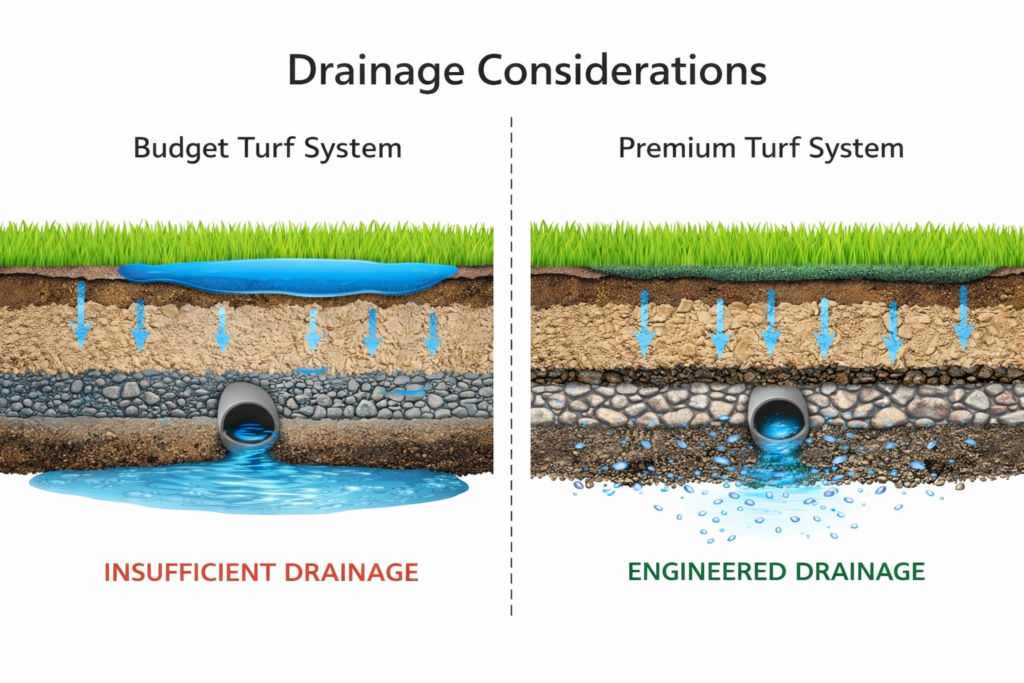
Drainage Considerations
Drainage requirements vary significantly from yard to yard. Budget systems often assume existing grades and drainage are sufficient. Premium systems evaluate runoff paths, slope transitions, and soil composition before installation begins.
Effective drainage prevents pooling, odor retention, and base saturation. These factors directly impact long-term maintenance and surface stability.
Seams, Edges, and Long-Term Appearance
Budget installations often prioritize speed over seam layout planning. This can result in visible seams, edge separation, or fiber mismatch as the turf settles. Premium systems plan seam orientation carefully and reinforce high-stress areas.
Edge preparation also differs. Premium systems use defined restraints and transitions that protect turf borders and prevent shifting over time.
In The Colony, turf selection often balances performance, appearance, and long-term maintenance efficiency to match neighborhood expectations and lifestyle needs.
Maintenance Expectations
Budget turf systems typically require more frequent brushing, infill adjustment, and localized repairs. Premium systems are designed to reduce ongoing maintenance by stabilizing the surface from the start.
Lower maintenance requirements translate to fewer service calls and more consistent appearance throughout the year.
Cost Comparison: Short-Term vs Long-Term
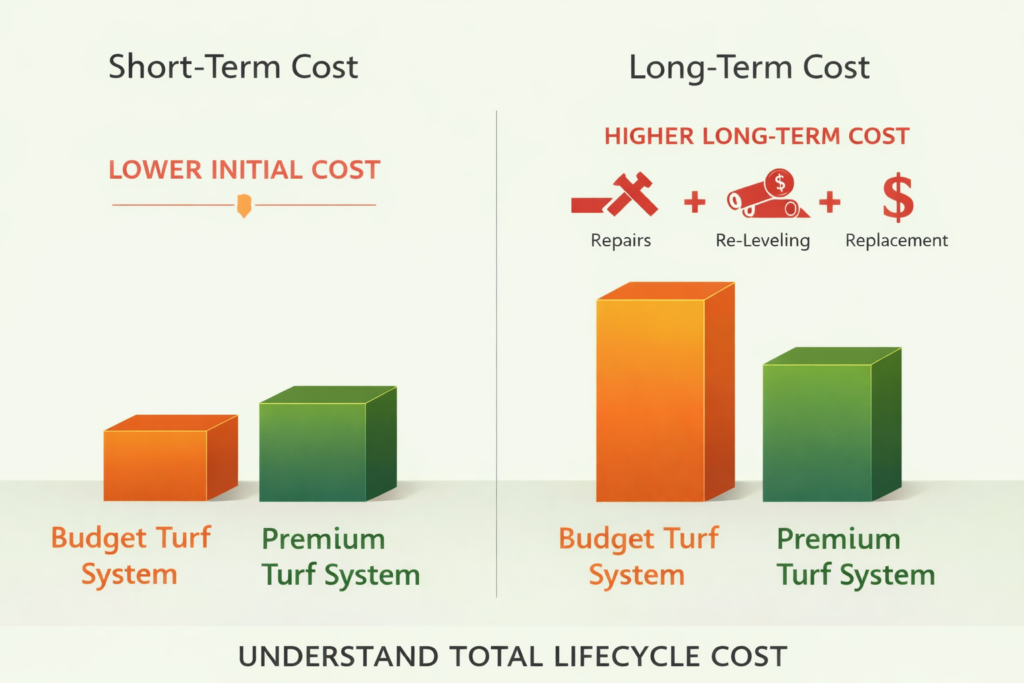
Budget turf lowers upfront cost but may increase long-term expenses through repairs, re-leveling, or early replacement. Premium turf systems carry a higher initial investment but often deliver better value over time.
Understanding total lifecycle cost helps homeowners make informed decisions beyond the initial quote.
When Budget Turf Can Make Sense
Budget turf can be appropriate for decorative spaces, low-use side yards, or temporary applications. It may also suit homeowners prioritizing short-term appearance over long-term durability.
Matching turf type to usage prevents overbuilding or underbuilding a system.
In Justin and Lucas, turf selection is often driven by application and acreage size, with many homeowners balancing performance needs with overall project scope.
When Premium Turf Is the Better Choice
Premium turf systems are better suited for high-traffic yards, pet areas, recreational spaces, and properties with drainage challenges. These systems provide stability, comfort, and consistent performance under daily use.
In master-planned communities like Allen and Carrollton, many homeowners choose premium turf systems to ensure consistent curb appeal and long-term durability that aligns with HOA expectations.
Premium solutions reduce future disruptions and preserve yard usability.
How to Choose the Right Turf System
- Evaluate how the space will be used daily
- Consider drainage and soil conditions
- Understand base construction scope
- Compare installation methodology, not just turf samples
- Balance upfront cost with long-term performance
Related Planning Resources
FAQs
Is premium turf always necessary?
Premium turf is not required for every yard. It performs best in high-traffic, pet-heavy, or complex sites with drainage challenges. Decorative or low-use areas may function well with simpler systems when expectations align with performance limits and long-term durability requirements.
Does premium turf eliminate maintenance?
No turf system is maintenance-free. Premium systems reduce maintenance frequency by stabilizing the base, improving drainage, and supporting fiber recovery. Homeowners still need periodic brushing, debris removal, and infill management to preserve appearance and surface consistency over time.
Can budget turf be upgraded later?
Upgrading budget turf often requires removing and rebuilding portions of the system. Base depth, drainage, and seam layout typically limit simple upgrades. Planning the correct system upfront usually costs less than correcting foundational limitations after installation.
What causes budget turf systems to fail prematurely?
Most failures result from inadequate base preparation, insufficient compaction, or poor drainage planning. These issues lead to settling, seam stress, and surface movement. Turf quality alone cannot compensate for foundational shortcomings beneath the surface.
How do I know which turf system is right for my yard?
The right system depends on usage patterns, soil behavior, drainage needs, and long-term expectations. Evaluating these factors before selecting turf prevents overbuilding or underbuilding and ensures the system performs reliably within your specific environment.