How Long Artificial Turf Lasts in North Texas (Real Lifespan Factors Explained)
Artificial turf offers long-term performance when designed and installed correctly.
Most homeowners want to know how long turf truly lasts before replacement becomes necessary.
Marketing claims often promise 15 to 20 years of performance.
Those numbers rarely reflect North Texas environmental conditions.
Heat, clay soil, drainage loads, and usage patterns all affect turf lifespan.
Installation quality also plays a major role in long-term durability.
Understanding lifespan factors helps homeowners make smarter investment decisions.
It also helps prevent premature turf failure.
At OhMyYard, our installation standards focus on long-term performance, not short-term appearance.
You can explore our complete system approach on our Artificial Turf Systems page.
Typical Artificial Turf Lifespan Expectations
Artificial turf lifespan varies depending on product quality and installation standards.
Most residential artificial turf systems last between 12 and 20 years nationally.
North Texas typically reduces lifespan when systems lack proper engineering.
Extreme UV exposure accelerates fiber degradation and color fading.
Higher traffic areas wear faster than decorative landscape installations.
Pet areas also experience faster infill compaction and fiber fatigue.
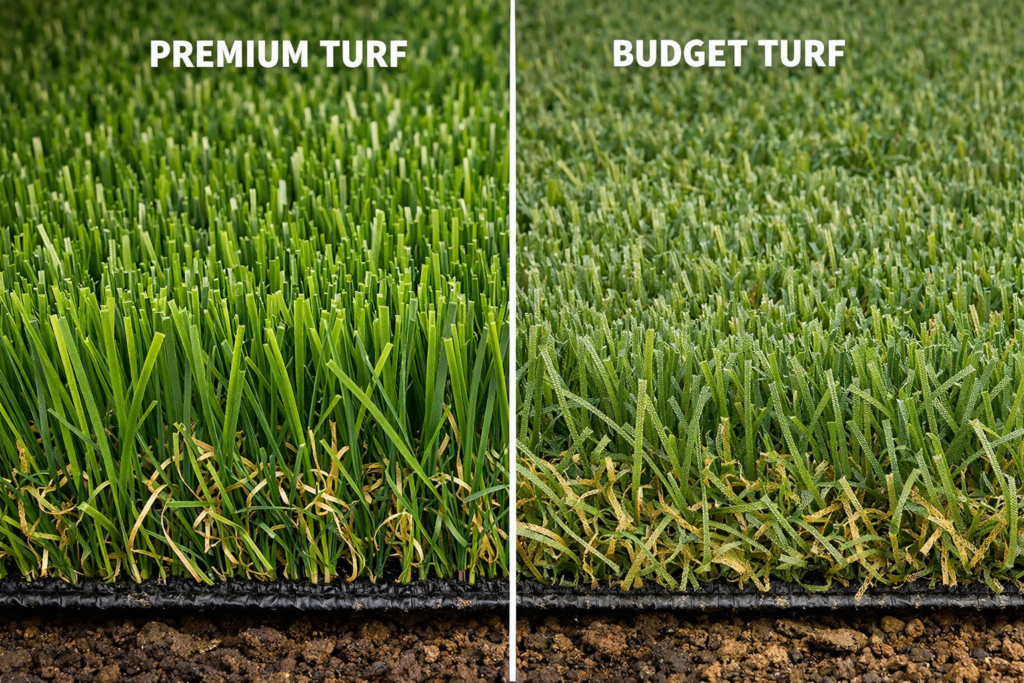
Premium turf products usually outlast entry-level turf by several years.
Installation quality often determines whether turf reaches its expected lifespan.
Our installation process focuses on building turf systems designed for North Texas conditions.
Why North Texas Climate Impacts Turf Longevity
North Texas climate creates unique stress conditions for synthetic turf systems.
Long summers expose turf surfaces to extreme UV radiation.
Constant sun exposure weakens polyethylene turf fibers over time.
Heat expansion and nighttime cooling cycles create repeated stress movement.
Heavy clay soils expand during wet seasons.
Clay contracts during dry seasons, creating base instability risks.
Seasonal storms create intense drainage demands beneath turf systems.
Poor drainage traps moisture and accelerates backing deterioration.
Regional soil movement makes professional base construction extremely important.
Improper excavation often leads to early system failure.
Our Turf Base Preparation guide explains how engineered bases prevent long-term performance problems.
The #1 Factor That Determines Turf Lifespan
Base preparation determines more lifespan outcomes than turf product selection.
Proper excavation removes unstable organic material beneath the surface.
Engineered aggregate bases create structural stability for turf systems.
Compaction reduces shifting and prevents uneven settlement.
Stable bases protect seams from stress and separation over time.
Stable bases also protect drainage systems from collapse.
Turf installed over unstable soil fails faster regardless of turf quality.
Professional base engineering extends turf lifespan significantly.
Our artificial turf base preparation systems focus on long-term soil stability.
Want to know if your yard supports long-term turf performance? Schedule a site evaluation with our design team.
How Drainage Performance Affects Turf Longevity
Drainage plays a major role in protecting turf backing materials and infill performance.
Water buildup weakens adhesives and accelerates material breakdown.
Standing water promotes bacterial growth in pet turf installations.
Excess moisture also causes base material migration.
Proper drainage systems move water vertically and horizontally through turf layers.
Drainage planning prevents water pooling and preserves system integrity.
North Texas storms create rapid water saturation events.
Turf systems must handle high drainage loads during heavy rainfall.
Our Artificial Turf Drainage guide explains how drainage protects turf longevity.

How Turf Product Quality Changes Lifespan
Turf fiber composition directly affects wear resistance and UV stability.
Premium polyethylene fibers retain color and shape longer.
Higher stitch rates create denser turf surfaces with better structural support.
Stronger backing systems improve seam durability and infill retention.
Budget turf often uses thinner fibers and weaker backing materials.
Lower-quality turf shows matting and fading earlier.
Premium turf systems usually maintain performance several years longer.
Premium turf also provides better realism and comfort.
Our Budget vs Premium Turf comparison explains performance differences between product tiers.
Wear Patterns Homeowners Often Overlook
Turf wear rarely appears evenly across entire installations.
High traffic lanes experience fiber flattening and infill displacement first.
Pet zones often develop localized wear patterns near drainage and sanitation areas.
Shaded areas sometimes retain moisture longer and degrade backing faster.
Sun-exposed sections fade faster than shaded turf sections.
Play areas compress infill more aggressively than decorative turf sections.
Professional installation accounts for these wear pattern variables.
Installation planning distributes stress loads across turf surfaces.
Understanding wear patterns helps homeowners maintain turf performance longer.
Maintenance That Extends Artificial Turf Life
Routine maintenance protects turf performance and extends lifespan.
Maintenance prevents infill compaction and fiber matting.
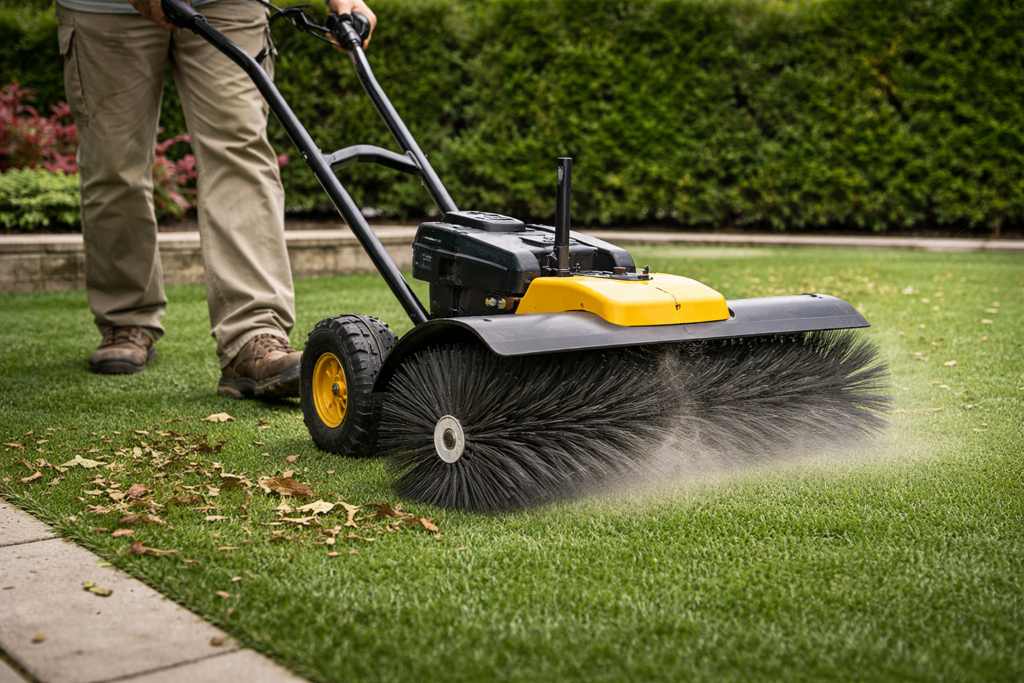
Periodic power brushing restores turf fiber position and improves appearance.
Debris removal prevents drainage blockages.
Pet turf installations require sanitation flushing to prevent bacterial buildup.
Professional maintenance inspections detect early performance issues.
Well-maintained turf systems consistently outlast neglected installations.
Maintenance programs protect long-term turf investment value.
Signs Artificial Turf Nears End of Life
Fiber splitting and severe matting indicate turf fiber fatigue.
Visible seam separation signals structural stress failure.
Drainage slowdowns often indicate backing or base system breakdown.
Persistent odors sometimes signal infill contamination.
Color fading beyond normal weathering suggests UV material breakdown.
Surface instability often indicates base settlement issues.
Recognizing early warning signs allows homeowners to plan replacement timelines effectively.
Our Artificial Turf Installation Mistakes guide explains how improper installation accelerates system failure.
Replacement Planning and Long-Term Investment Strategy
Artificial turf replacement rarely requires full site reconstruction.
Quality base systems often remain structurally stable for replacement projects.
Planning replacement timelines helps homeowners budget effectively.
Professional installation companies evaluate base reuse potential during replacement assessments.
Higher quality installations reduce lifetime ownership costs.
Lower quality installations often require earlier replacement and higher long-term costs.
Understanding turf lifecycle economics helps homeowners select proper turf systems initially.
Artificial Turf Lifespan in Celina, Prosper, Westlake, and Southlake
Turf lifespan varies based on neighborhood soil conditions and property usage patterns.
Different cities experience unique drainage and clay soil behavior.
Homeowners researching turf installation can explore some of our city-specific installation standards:
- Celina Turf Installation Page
- Prosper Turf Installation Page
- Westlake Turf Installation Page
- Southlake Turf Installation Page
These city pages explain regional installation considerations and design recommendations.