Artificial Turf Around Pools in North Texas Designed for Safety, Drainage, and Comfort
Artificial turf creates safe, low-maintenance surfaces around swimming pools when installed correctly in North Texas.
Pool environments introduce moisture, chlorine exposure, and high foot traffic.
Pool turf installations require specialized drainage and slip-resistant design.
Improper turf selection can create safety hazards and surface deterioration.
North Texas climate increases installation complexity around pools.
Extreme heat, UV exposure, and clay soil movement stress pool landscape materials.
Professionally engineered turf systems remain stable and safe around splash zones.
Quality installations maintain comfort and performance during year-round pool use.
Homeowners can review our complete artificial turf installation process here to understand system construction.
Why Pool Areas Require Specialized Artificial Turf Systems
Pool environments expose turf to water, chlorine, sunscreen, and constant foot traffic.
Standard landscape turf may fail in splash zone conditions.
Slip resistance becomes critical around wet surfaces.
Premium turf fibers improve traction during barefoot movement.
Drainage performance prevents puddling near pool decks.
Standing water increases slip risk and turf wear.
In Keller, where custom pools and elevated patios are common, turf integration must align with both drainage strategy and high-end design aesthetics.
Heat resistance also impacts comfort around pool surfaces.
Cooling turf technologies reduce barefoot surface temperature during summer months.
Homeowners comparing turf quality can review our Budget vs Premium Artificial Turf authority page here.
Slip Resistance and Surface Safety Around Swimming Pools
Wet surfaces increase slip hazards around pool decks and entry points.
Artificial turf naturally improves traction compared to smooth hardscapes.
Dense turf fibers create friction during foot contact.
This reduces sliding risks during pool entry and exit.
Infill selection influences slip resistance performance.
Angular sand infill improves surface stability under wet conditions.
Proper turf fiber height maintains safe walking surfaces.
Fibers that flatten easily reduce traction over time.
Homeowners concerned about turf durability can review our Artificial Turf Installation Mistakes to Avoid guide here.
Drainage Engineering for Pool Turf Splash Zones
Pool splash zones generate constant surface water exposure.
Drainage failure causes pooling, odor, and turf deterioration.
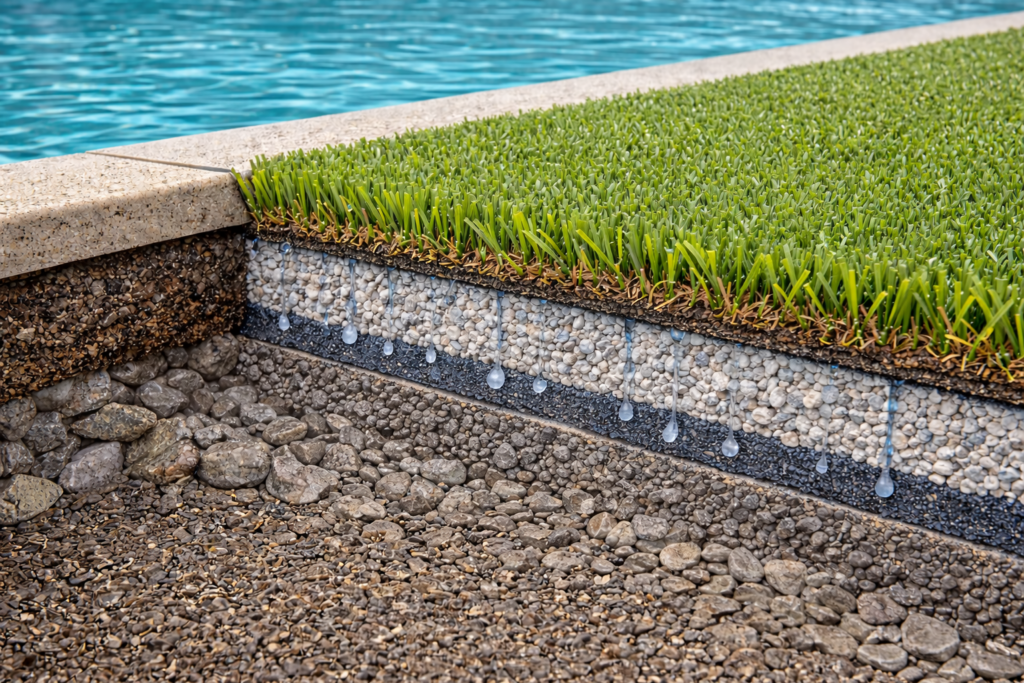
Professional installations include permeable base construction beneath turf surfaces.
Aggregate bases allow rapid vertical water movement.
Integrated drainage systems channel water away from pool decks.
Proper slope design directs splash water toward drainage exits.
North Texas clay soil increases drainage challenges around pools.
Clay expansion can disrupt base stability if excavation is insufficient.
Homeowners experiencing yard drainage issues can review our Artificial Turf Drainage in North Texas authority page here.
Turf Durability Around Chlorine and Chemical Exposure
Pool environments introduce chlorine and chemical runoff.
High-quality turf fibers resist chemical breakdown and color fading.
Premium backing materials prevent moisture saturation beneath turf layers.
Inferior backing systems trap water and weaken seams.
Proper rinsing removes chlorine residue from turf surfaces.
Routine rinsing preserves fiber strength and visual appearance.
Chemical exposure rarely damages professionally installed turf systems.
Poor drainage and low-quality fibers create most chemical-related turf failures.
Homeowners concerned about turf longevity can explore our Artificial Turf Warranty Guide here.
Heat Management and Barefoot Comfort Around Pools
Pool areas require comfortable barefoot walking surfaces.
Artificial turf absorbs less heat than many hardscape materials.
Cooling turf fibers reflect infrared heat and reduce surface temperature.
Cooling infill materials further improve barefoot comfort.
Light-colored turf fibers reduce heat absorption during peak sunlight.
Strategic shade design also improves summer comfort.
North Texas summer temperatures create extreme surface heat exposure.
Proper turf selection protects homeowners and pets from burn risk.
Homeowners comparing turf comfort can review our Artificial Turf Heat and Safety in Texas page here.
Turf Edge Transitions Between Pools, Coping, and Hardscapes
Pool turf installations require precision edge transitions.
Improper edges create trip hazards and visual imperfections.
In communities throughout The Colony, homeowners often integrate artificial turf around pool decks to maintain clean, mud-free transitions while maximizing entertainment space.
Professional installers secure turf edges using concealed anchoring systems.
Secure anchoring prevents lifting and seam separation.
Transition planning ensures smooth connections between turf and pool coping.
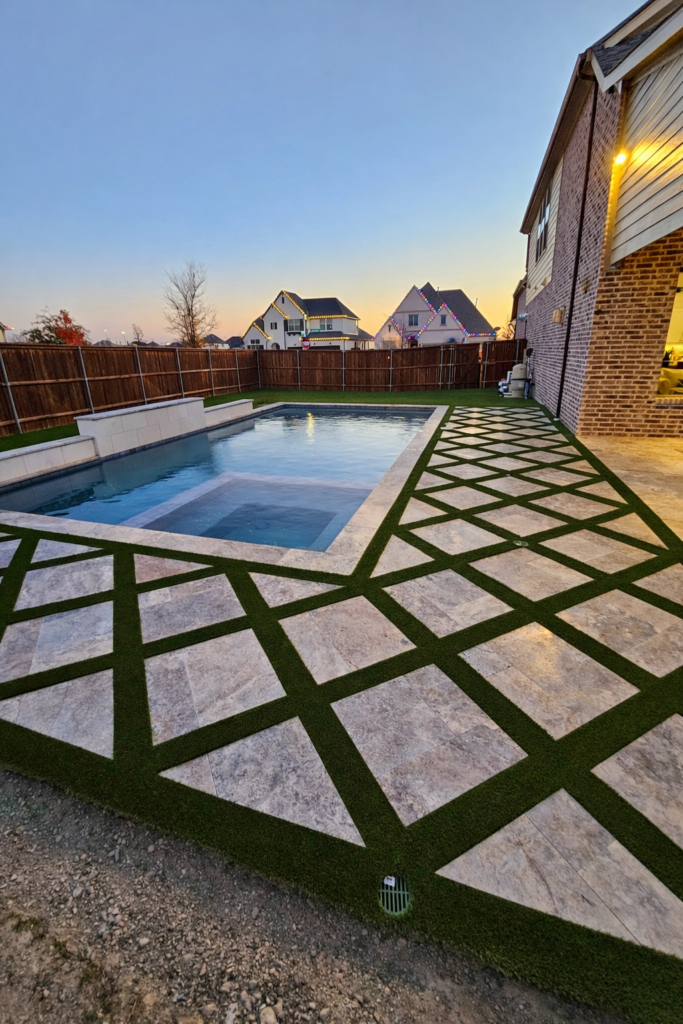
Installers integrate turf with pavers, concrete, and decorative stone.
Proper seam placement maintains natural appearance across pool landscapes.
Homeowners concerned about seam visibility can review our Why Artificial Turf Seams Show authority page here.
Design Integration Between Turf, Pools, and Outdoor Living Spaces
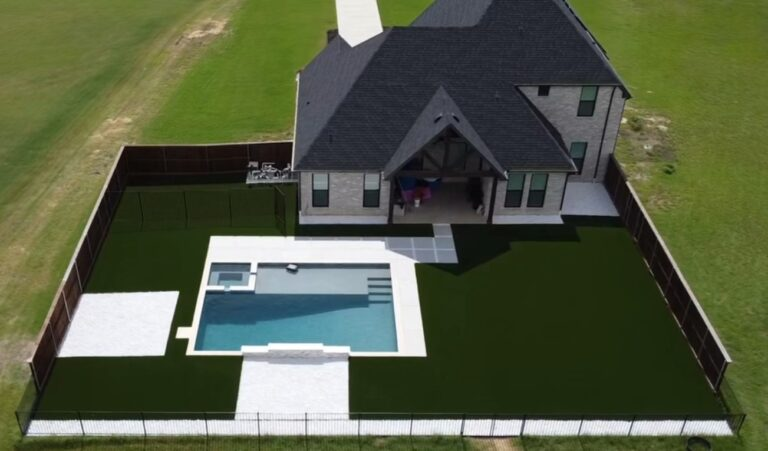
Artificial turf enhances luxury outdoor living design around pools.
Homeowners often integrate turf with patios, pergolas, and fire features.
Flower Mound properties often require engineered base preparation to ensure proper drainage around pool decks and turf surfaces.
Turf creates soft lounging areas near pool seating zones.
Artificial grass also supports recreational play space for children.
Turf reduces mud and debris entering pool water.
Cleaner pool environments reduce maintenance and filtration strain.
In Allen neighborhoods, turf is frequently installed around pool decks to eliminate mud tracking while maintaining a clean, uniform backyard presentation.
Homeowners designing outdoor spaces often compare turf with natural grass options.
For landscaping comparisons, review our Artificial Turf vs Natural Grass in North Texas guide here.
Many homeowners research installations in North Texas areas such as Celina, Prosper, Westlake, and Southlake before choosing contractors.
Maintenance Requirements for Artificial Turf Pool Areas
Artificial turf reduces pool landscape maintenance significantly.
Homeowners eliminate mowing, fertilizing, and irrigation around pool decks.
Routine rinsing removes sunscreen, debris, and chemical residue.
Brushing turf maintains fiber positioning and visual appearance.
Periodic inspection ensures edges and seams remain secure.
Maintenance requirements remain minimal compared to natural grass.
Homeowners evaluating long-term maintenance can review our Artificial Turf Maintenance in North Texas authority page here.
Why Professional Installation Determines Pool Turf Performance
Pool turf installations require landscape and drainage engineering expertise.
Improper grading or base preparation causes turf shifting and water retention.
Professional installers evaluate yard slope and soil composition before installation.
Engineering prevents structural issues and safety risks.
Artificial turf around pools combines recreation, safety, and luxury design.
Experienced installation ensures long-term durability and visual performance.
Homeowners researching turf lifespan can review our How Long Artificial Turf Lasts in North Texas authority page here.
Turf Hygiene, Mold Prevention, and Moisture Control Around Pool Environments
Pool environments create constant moisture exposure around turf surfaces.
Standing moisture can encourage mold growth when drainage systems fail.
Professionally installed turf systems prevent moisture retention beneath turf layers.
Permeable backing allows water to move vertically through turf surfaces.
Engineered base systems eliminate trapped organic material beneath installations.
Organic debris often causes odor and microbial growth in poorly built turf systems.
Splash zones frequently trap sunscreen residue and pool chemicals.
Routine rinsing removes chemical buildup and preserves turf cleanliness.
North Texas humidity increases mold growth risks in shaded pool areas.
Proper drainage and airflow reduce long-term moisture accumulation.
Antimicrobial infill materials provide additional sanitation protection.
These infill products help reduce bacteria growth in high-moisture environments.
Homeowners installing turf near pets or heavy traffic should consider sanitation design carefully.
Pet traffic combined with pool moisture can increase odor risk if turf drains poorly.
To understand how drainage engineering protects turf sanitation, review our Artificial Turf Drainage in North Texas authority page here.
Proper base preparation remains critical for moisture management and turf hygiene.
Homeowners can review our Turf Base Preparation in North Texas authority guide here.
Well-designed turf pool environments remain clean and safe throughout seasonal weather cycles.
Professional installation protects turf from mold growth and odor development.
Upgrade Your Pool Landscape With Artificial Turf
OhMyYard designs artificial turf pool environments across North Texas.
Our installations prioritize safety, drainage, and long-term durability.
Schedule a consultation to explore pool turf design options.