
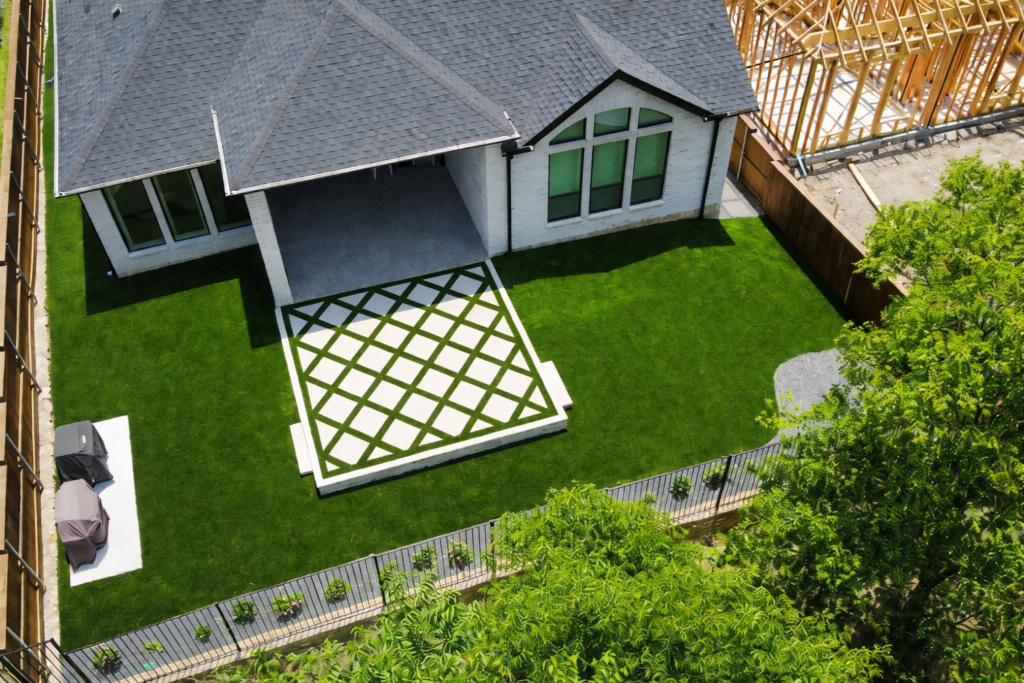
Artificial Turf Drainage in North Texas
Artificial turf drainage determines whether a yard stays clean, dry, and stable long term.
In North Texas, drainage failures ruin otherwise high-quality turf installations.
The problem is not the turf product.
The problem is water movement below the surface.
North Texas soil, rainfall patterns, and flat lot grading create unique drainage challenges.
Ignoring those realities causes odor, pooling, seams lifting, and base failure.
Proper drainage design prevents these issues before turf is installed.
This page explains how turf drainage works in North Texas and how to do it correctly.
Why Turf Drainage Is Different in North Texas
North Texas soil contains heavy clay with very low permeability.
Clay soil absorbs water slowly and releases it even slower.
Water that cannot move downward must move sideways or remain trapped.
Many residential lots are graded flat by builders.
Flat grades limit natural water flow away from turf areas.
During storms, water accumulates beneath turf systems.
Rainfall events in North Texas are intense and sudden.
This is especially true in cities like Celina, Prosper, Westlake, and Southlake, where clay-heavy soil and flat residential grading are common.
Short storms can drop large volumes of water quickly.
Without drainage planning, turf systems stay saturated.
Turf does not fail because it gets wet.
Turf fails because trapped water destabilizes the base.
In areas like Justin and Lucas, where lot grading and clay soil conditions can vary significantly, proper base preparation and drainage planning are critical to long-term turf performance.
What Happens When Turf Drainage Is Ignored
Poor drainage causes problems that surface months after installation.
These failures often appear gradual but worsen quickly.
Common symptoms include standing water after rain.
Odor develops in pet areas despite regular rinsing.
Seams become visible as the base shifts unevenly.
Edges curl as trapped moisture weakens containment.
Saturated bases lose compaction strength.
As soil moves, turf moves with it.
Once movement starts, cosmetic fixes do not last.
Most turf failures trace back to drainage shortcuts during installation.
Drainage Problems Often Appear Months Later
Drainage failures rarely appear immediately after installation.
Many turf systems look fine during the first few weeks.
Problems develop after repeated rain cycles and soil movement.
Water slowly weakens the compacted base below the turf.
As moisture remains trapped, the base loses structural strength.
This causes subtle shifting that worsens over time.
Homeowners often mistake early symptoms for minor issues.
They try rinsing, brushing, or deodorizing the turf surface.
Those actions do not correct subsurface water retention.
Delayed failure is why drainage mistakes are so expensive.
By the time symptoms appear, repairs require partial reconstruction.
See other common turf installation mistakes HERE.
Common Drainage Shortcuts That Fail
Many installers rely on crushed aggregate alone for drainage.
Aggregate stores water but does not remove it.
Without an outlet, water remains trapped under turf.
Some installers skip slope correction entirely.
They install turf over existing grades.
Water then follows the same paths it always did.
Others avoid connecting drains to daylight or storm systems.
A drain without discharge does nothing.
Water must exit the system.
Edge restraints sometimes block water flow.
Poor containment traps moisture inside the turf field.
These shortcuts reduce installation time but increase failure risk.
Proper Turf Drainage Options in North Texas
Effective drainage solutions depend on site conditions.
There is no single drainage method that works everywhere.
Regrading corrects slope before turf installation.
Even small grade changes improve water movement dramatically.
French drains collect subsurface water and redirect it.
They require proper depth, gravel, and outlet planning.
Perimeter drains relieve water pressure around turf areas.
They work well near patios, walls, and foundations.
Catch basins handle surface runoff in low areas.
They prevent pooling during heavy rain events.
Successful drainage systems always include a discharge point.
Water must exit the turf system completely.
Drainage Design Must Match Yard Use
Drainage design must reflect how the space will be used.
Different turf applications place different demands on water movement.
Pet areas require faster drainage and deeper base preparation.
High traffic zones compress the base more aggressively.
Putting greens require precise slope control and moisture balance.
Side yards often trap runoff between structures.
Backyards may collect water from roof drainage and patios.
Each scenario changes how drainage should be engineered.
One-size-fits-all drainage designs fail in mixed-use yards.
Effective systems adapt to function, not just appearance.
Pets, Odor, and Drainage Are Connected
Pet odor problems are usually drainage problems.
Urine contains salts that require rinse-through to clear.
Without drainage, those salts remain trapped.
Cooling infill does not fix poor drainage.
Odor sprays do not fix trapped moisture.
Only water movement fixes odor long term.
Pet turf areas need higher drain-through rates.
They often require additional drainage support below the base.
Drainage design matters more than turf type for pet installations.
How to Tell If Your Yard Needs Drainage Before Turf
You may need drainage work before turf installation if water pools after rain.
Soft ground days after storms indicates trapped moisture.
Existing sod struggles in the same areas.
Flat yards with clay soil almost always need drainage planning.
Homes with prior flooding issues require extra attention.
If water has nowhere to go now, turf will not fix it.
Turf will only hide the problem temporarily.
Drainage evaluation should happen before turf design begins.
Why Turf Alone Never Fixes Drainage Issues
Artificial turf does not improve drainage by itself.
Turf simply covers the existing soil and base conditions.
If water pools before turf, it will pool after installation.
Turf can hide symptoms temporarily but cannot solve root causes.
Some homeowners assume permeable turf backing solves drainage.
Backing allows vertical flow, not lateral water removal.
Without an outlet, water remains trapped below.
Proper drainage must exist before turf is installed.
Turf performs best when water already has a clear exit path.
How We Design Drainage-First Turf Systems
We treat drainage as a system, not an add-on.
We evaluate slope, soil, runoff paths, and discharge options first.
Our team will adjust grades when needed before base installation.
They design drains to move water out of the system.
We never rely on aggregate alone.
We integrate drainage with base depth and compaction strategy.
Each element supports the others.
We refuse installs where drainage shortcuts guarantee failure.
Long-term performance matters more than speed.
Drainage Planning Reduces Long-Term Maintenance
Well-designed drainage reduces long-term turf maintenance.
Dry bases resist shifting and compaction loss.
Seams remain tighter when the base stays stable.
Infill distributes evenly when moisture does not collect.
Odor treatments work better when water drains properly.
Poor drainage increases brushing, rinsing, and repair frequency.
Maintenance becomes reactive instead of preventative.
Drainage planning protects both performance and appearance.
It lowers ownership costs over the life of the turf system.
Why Drainage Determines Turf Longevity
Well-drained turf systems remain stable for years.
Bases stay compacted and seams stay hidden.
Odor stays manageable even in pet areas.
Poor drainage shortens turf lifespan significantly.
Repairs cost more than doing drainage correctly upfront.
Drainage is not optional in North Texas.
It is foundational. In fact, it is a premium differentiator.
Final Thoughts on Turf Drainage in North Texas
Artificial turf succeeds in North Texas when water management comes first.
Drainage planning prevents most long-term turf problems.
If you plan turf installation, confirm drainage before committing.
A proper system protects your investment.
See how proper drainage contributes to why turf prices vary in North Texas HERE.
*We assess slope, soil, and drainage before installation.