Artificial Turf for Dogs and High-Traffic Areas Requires Engineering, Not Products
Most turf failures happen in homes with dogs or constant foot traffic.
That outcome surprises many homeowners.
The problem is not turf quality.
The problem is system design.
Dogs expose weak installations faster than weather or time.
High traffic reveals shortcuts immediately.
We see these failures most often in North Texas communities like Celina, Prosper, Westlake, and Southlake, where pets, active yards, and frequent outdoor use quickly expose weak turf systems.
At OhMyYard, we design turf systems specifically for these conditions.
We do not rely on materials alone.
Why Dog Turf Fails So Often
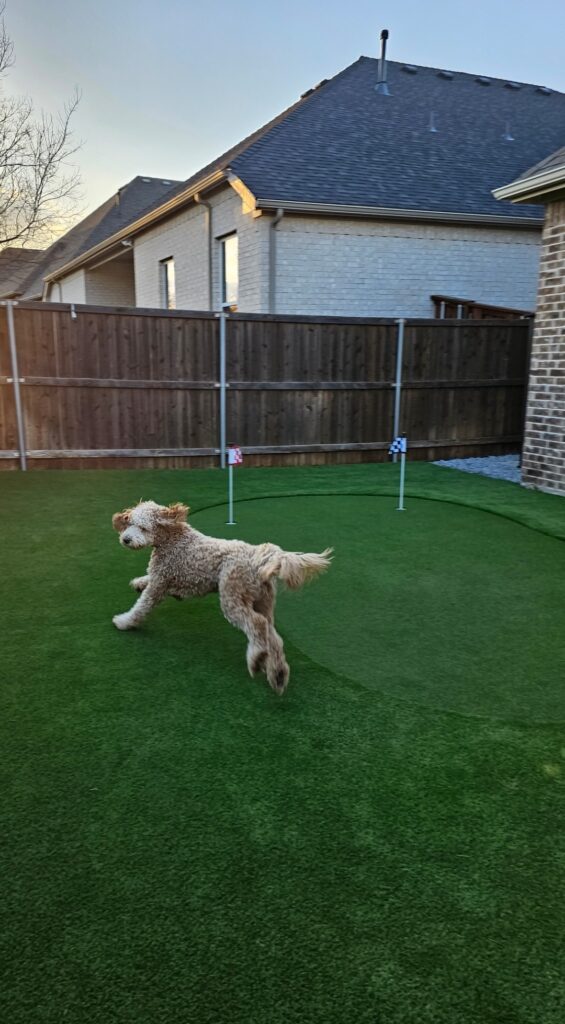
Dogs apply repeated stress to the same areas.
They accelerate wear patterns.
Common failure points include seams, edges, and base transitions.
Poor drainage compounds these issues.
Urine saturation exposes inadequate infill and base design.
Odors develop when water cannot evacuate.
Surface rippling appears when compaction fails.
Matting follows when fiber recovery is ignored.
These outcomes do not reflect bad turf.
They reflect poor engineering.
Traffic Load Changes Everything
High-traffic turf behaves differently than decorative turf.
It requires deeper preparation.
Walk paths, play zones, and dog runs concentrate force.
That force transfers into the base.
Shallow bases collapse under repetition.
Inconsistent compaction creates movement.
Most installers build turf for appearance.
We build turf for use.

Drainage Is Non-Negotiable for Dog Homes
Dogs introduce liquid loads every day.
Without drainage, systems fail.
Standing moisture causes odor retention.
It also breaks down infill performance.
We design drainage before installation begins.
Water must evacuate vertically and laterally.
This planning prevents saturation zones.
It protects base integrity.
Good drainage also protects turf fibers.
Dry systems recover faster.
Carrollton homeowners frequently install pet-specific turf systems to reduce mud and improve drainage in smaller backyard environments.
Why Infill Choice Matters for Pets
Infill controls stability, odor, and surface temperature.
Not all infills perform equally.
Pet homes require infill that resists compaction.
They also require odor-mitigating properties.
We select infill based on usage patterns.
We do not default to generic blends.
Incorrect infill choices lead to matting and smell.
Correct choices extend system life.
Base Preparation Determines Longevity
The base supports everything above it.
Failure always starts there.
Dog turf requires deeper bases.
It also requires tighter compaction standards.
We build bases to resist lateral movement.
We verify compaction during installation.
Our teams do not rely on visual inspection.
We rely on process.
This discipline prevents settling and rutting.
It keeps surfaces flat under stress.
Learn more about the importance of turf base preparation in North Texas HERE.
Seam and Edge Control in Dog Areas
Dogs attack weak points instinctively.
Seams and edges suffer first.
Loose seams invite digging.
Poor edge anchoring causes lifting.
We reinforce transitions intentionally.
We bury edges deeper in pet zones.
Our crew also controls seam placement.
We never place seams in traffic lanes.
This approach eliminates common failure triggers.
Learn more about some of the common mistakes with artificial turf seams HERE.
Why Premium Dog Turf Costs More
Dog-ready systems require additional labor and materials.
They require more time.
Premium pricing reflects:
- Deeper base systems
- Enhanced drainage planning
- Specialized infill selection
- Reinforced seams and edges
- Tighter installation tolerances
Skipping these steps saves money initially.
It guarantees problems later.
Learn more about budget vs premium artificial turf HERE.
High-Traffic Turf Is Not Decorative Turf
Some turf exists for visual appeal.
Dog turf must perform.
We separate these use cases clearly.
We design systems accordingly.
High-traffic areas demand resilience.
They demand recovery.
Our premium tiers account for that reality.
They price risk honestly.
What We Refuse to Compromise for Dog Homes
Certain standards apply to every pet project:
- Minimum base depth thresholds
- Verified compaction
- Drainage integration
- Odor-resistant infill
- Reinforced seams
- Edge security
If a project cannot meet these standards, we decline it.
That protects both parties.
Long-Term Performance Matters More Than Warranty Language
Warranties do not prevent failure.
Proper installation does.
We design turf systems to perform years later.
Not just during walkthroughs.
Clients choose us because their dogs test everything.
Our systems hold up.
Homeowners in Justin and Lucas frequently install pet-specific turf systems across larger backyard areas to reduce mud, improve drainage, and simplify maintenance.
The Bottom Line for Pet Owners
Dogs reveal the truth about turf.
There are no shortcuts.
If you want turf that survives pets and traffic, process matters.
Engineering matters.
Premium systems eliminate repeat failures.
They protect your investment.