
Artificial Turf Heat and Surface Safety in Texas (What Homeowners Must Understand)
Artificial turf provides durable and low-maintenance outdoor surfaces.
However, homeowners frequently ask about turf heat and safety performance.
Texas summer temperatures create extreme surface heat conditions.
All outdoor surfaces experience heat exposure, including turf, concrete, and natural grass.
Understanding turf heat behavior helps homeowners plan safe outdoor environments.
Proper installation and material selection dramatically influence turf temperature performance.
Artificial turf safety depends on product selection, drainage performance, and shading design.
Homeowners should evaluate surface safety when designing recreational outdoor spaces.
You can explore our Artificial Turf Systems design standards for heat-conscious installation planning.
Why Artificial Turf Gets Hot in Texas
Artificial turf absorbs sunlight differently than natural grass.
Synthetic fibers store solar heat energy within surface layers.
Natural grass cools itself through evapotranspiration.
Artificial turf does not release moisture through biological cooling.
Dark backing materials and rubber infill increase heat retention.
Heat accumulation occurs most during peak afternoon sunlight hours.
Surface temperatures vary depending on turf fiber color and density.
Wind exposure and shading dramatically affect turf cooling rates.
Understanding heat absorption helps homeowners design safer outdoor surfaces.
Comparing Turf Heat to Other Outdoor Surfaces
Many homeowners assume turf becomes hotter than all outdoor surfaces.
Concrete patios frequently reach higher temperatures than synthetic turf.
Asphalt driveways often exceed artificial turf heat levels significantly.
Natural grass typically remains cooler than artificial turf during direct sunlight.
Surface comfort depends on footwear use and exposure duration.
Shaded turf remains significantly cooler than direct sun installations.
Surface comparison helps homeowners evaluate overall outdoor safety planning.
Artificial turf often replaces concrete or stone recreational surfaces.
Turf can improve fall safety compared to hardscape materials.

Turf Fiber and Material Selection Influence Heat Performance
Modern turf products include cooling technology and reflective fiber engineering.
Premium turf fibers reduce solar heat absorption.
Lighter turf color blends reflect sunlight more effectively.
Dense thatch layers improve airflow beneath turf fibers.
Advanced backing materials allow improved ventilation and drainage cooling.
Premium turf products often perform better during peak summer heat.
Lower-quality turf materials often retain more solar heat.
Product selection significantly affects long-term comfort performance.
Our Budget vs Premium Turf guide explains product engineering differences.
Infill Selection and Heat Regulation
Infill material plays a major role in turf temperature performance.
Rubber infill absorbs solar heat aggressively during peak sunlight.
Silica sand infill typically remains cooler than rubber materials.
Organic infill blends improve moisture retention and cooling effects.
Advanced cooling infill products help reduce peak surface temperatures.
Proper infill depth supports airflow and moisture evaporation.
Professional installation balances performance durability and heat control.
Infill selection should reflect property usage and exposure patterns.
Our Turf Lifespan and Maintenance guides explain infill performance science.
Shade Planning and Turf Cooling Strategies
Shade design dramatically reduces turf surface temperature exposure.
Pergolas and patio covers reduce direct sunlight contact.
Strategic tree placement improves airflow and surface cooling.
Poolside turf installations benefit from evaporative cooling effects.
Architectural shading structures protect recreational play areas effectively.
Shade planning should occur during landscape design development.
Many North Texas homeowners integrate turf within covered patio environments.
Shade integration increases surface usability during summer afternoons.
We frequently incorporate shade-focused turf designs across installations in North Texas areas such as Celina, Prosper, Westlake, and Southlake .
Hydration Cooling and Surface Aesthetics
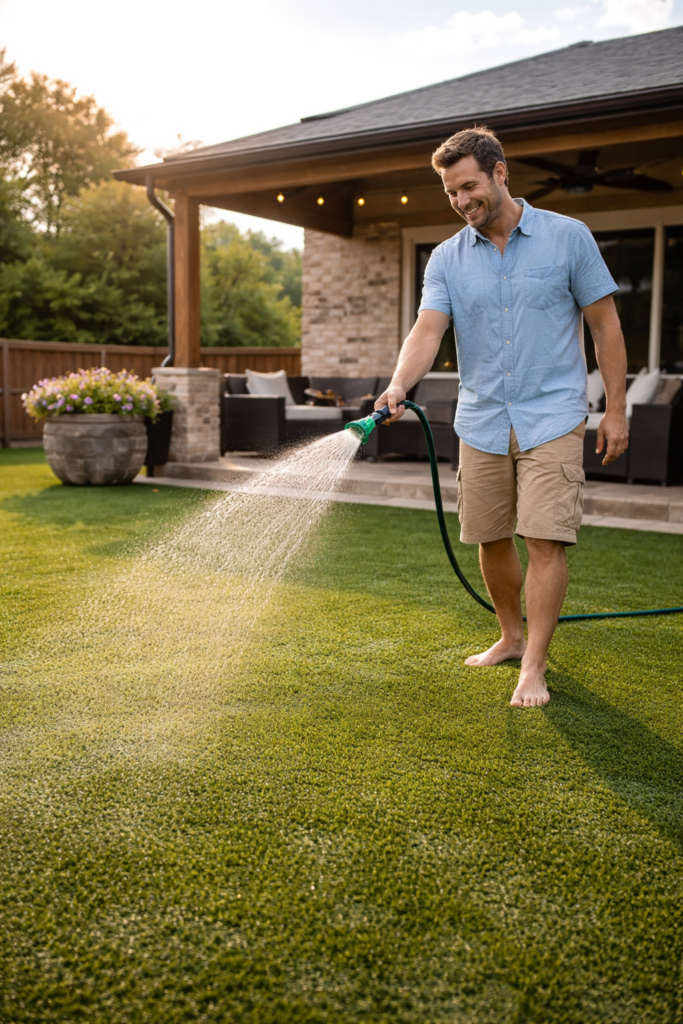
Artificial turf can cool rapidly through water evaporation.
Light watering temporarily reduces surface temperature significantly.
Cooling hydration methods work especially well before recreational use.
Evaporation removes stored solar heat from turf fibers.
Hydration also refreshes turf appearance and removes surface debris.
Pet turf sanitation routines naturally provide cooling benefits.
Homeowners often combine irrigation misting systems with turf installations.
Hydration cooling improves comfort during extreme summer weather.
Fall Safety and Impact Protection
Artificial turf improves fall safety compared to concrete or stone surfaces.
Turf systems include shock-absorbing infill and backing layers.
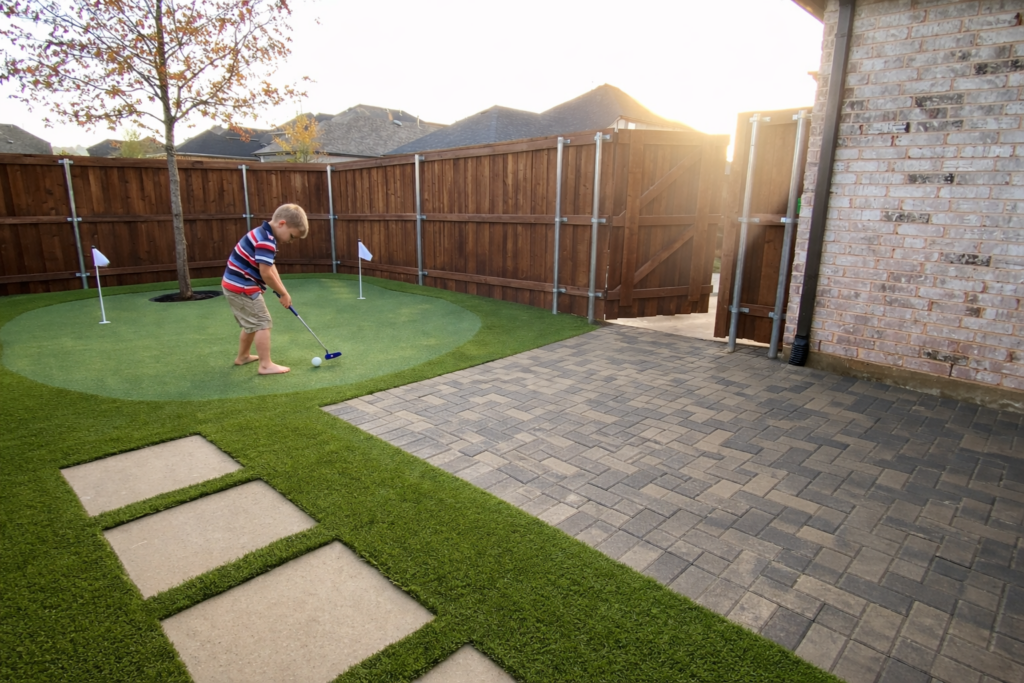
Children and pets benefit from cushioned turf recreational environments.
Professional base preparation improves turf impact absorption performance.
Sports turf systems often include specialized shock pad installations.
Shock pads improve athletic safety and injury reduction.
Proper installation ensures surface stability during play activities.
Safety planning should consider both heat and impact protection.
Our Turf Base Preparation guide explains structural safety engineering.
Pet Safety and Paw Comfort Considerations
Pet owners often ask about paw comfort during summer months.
Dogs tolerate turf surfaces similarly to other outdoor surfaces.
Pet safety improves through hydration cooling and shaded play areas.
Professional turf systems reduce mud and parasite exposure.
Routine sanitation maintains hygienic pet recreation environments.
Pet turf design considers drainage and sanitation performance.
Our Turf for Dogs installation guide explains pet-focused turf engineering.
Surface Testing and Safety Evaluation
Professional installers evaluate turf safety during installation planning.
Surface temperature testing verifies material performance under sunlight exposure.
Infill depth testing ensures structural stability and cushioning performance.
Drainage testing protects sanitation and surface moisture management.
Homeowners benefit from safety evaluations before installation begins.
Professional inspections identify performance improvements after installation.
Our Turf Installation Mistakes guide explains common safety failures.
Footwear Use and Safe Turf Surface Interaction
Surface comfort depends heavily on footwear selection and activity duration.
Barefoot exposure feels comfortable during morning and shaded afternoon conditions.
Direct barefoot exposure during peak sunlight increases surface heat sensation.
Light footwear dramatically improves comfort during extreme temperature conditions.
Athletic shoes protect feet during sports and recreational activities.
Children typically transition naturally between barefoot and footwear play.
Professional turf installations often include cooling and shading design recommendations.
Proper installation improves safe barefoot usability during moderate weather conditions.
Usage duration also affects surface comfort levels significantly.
Short recreational exposure creates minimal heat discomfort.
Extended exposure during peak sunlight requires cooling or shading solutions.
Hydration cooling quickly improves surface comfort before recreational activity.
Homeowners benefit from understanding real-world usage safety patterns.
Outdoor safety planning should consider footwear, hydration, and shading combinations.
Proper surface education improves homeowner satisfaction and long-term turf usability.
Families frequently adjust recreational schedules around peak sunlight hours.
This Artificial Turf Heat and Safety guide explains temperature performance engineering.
Our Turf Maintenance guide explains hydration cooling techniques.