Artificial Turf for Pets in North Texas Designed for Sanitation, Drainage, and Odor Control
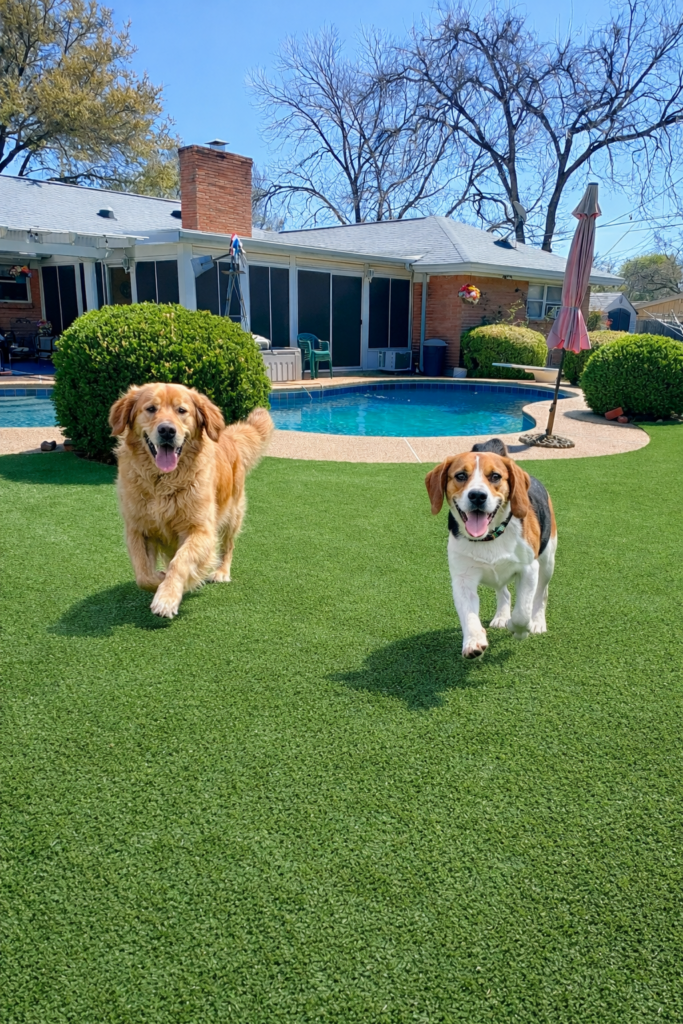
Artificial turf creates safe, durable outdoor spaces for pets when installed with proper sanitation engineering.
Pet environments introduce urine exposure, moisture retention, and heavy traffic wear.
Pet turf systems require specialized drainage and antimicrobial design.
Improper turf installation often leads to odor buildup and sanitation failure.
North Texas climate increases sanitation challenges.
Heat and humidity accelerate bacterial growth when turf systems drain poorly.
Professionally engineered turf installations remain clean and odor resistant for long-term pet use.
Proper drainage and base preparation protect turf hygiene and durability.
Homeowners can review our complete artificial turf installation process here to understand turf system construction.
Why Pet Turf Requires Specialized Drainage Engineering
Pet turf installations experience frequent liquid exposure from urine and cleaning rinses.
Drainage performance determines sanitation success in pet turf systems.
Many homeowners in The Colony choose pet-specific turf systems to eliminate mud tracking and improve drainage in high-traffic backyard areas.
Professional turf systems include permeable backing and engineered aggregate base layers.
These systems allow rapid vertical drainage beneath turf surfaces.
Standing moisture causes odor development and bacteria growth.
Proper drainage prevents liquid retention beneath turf installations.
North Texas clay soil increases drainage complexity.
Clay retains moisture and expands during seasonal rainfall cycles.
Professional excavation removes unstable organic soil before turf installation begins.
Engineered bases maintain airflow and moisture movement beneath turf layers.
Homeowners concerned about yard drainage can review our Artificial Turf Drainage in North Texas authority page here.
Understanding Odor Development in Poorly Installed Pet Turf
Urine odor typically develops when turf traps liquid beneath fiber layers.
Low-quality turf backing prevents proper drainage and airflow.
Organic soil beneath turf can absorb urine and create persistent odor.
Improper base preparation causes long-term sanitation failure.
Pet turf odors rarely result from turf fibers themselves.
Odor usually develops from drainage and base construction errors.
Heat exposure increases odor intensity during North Texas summers.
High surface temperatures accelerate bacterial growth in wet turf systems.
Proper installation prevents odor by eliminating moisture retention beneath turf surfaces.
Homeowners concerned about installation quality can review our Artificial Turf Installation Mistakes to Avoid authority guide here.
Antimicrobial Infill and Sanitation Technology in Pet Turf Systems
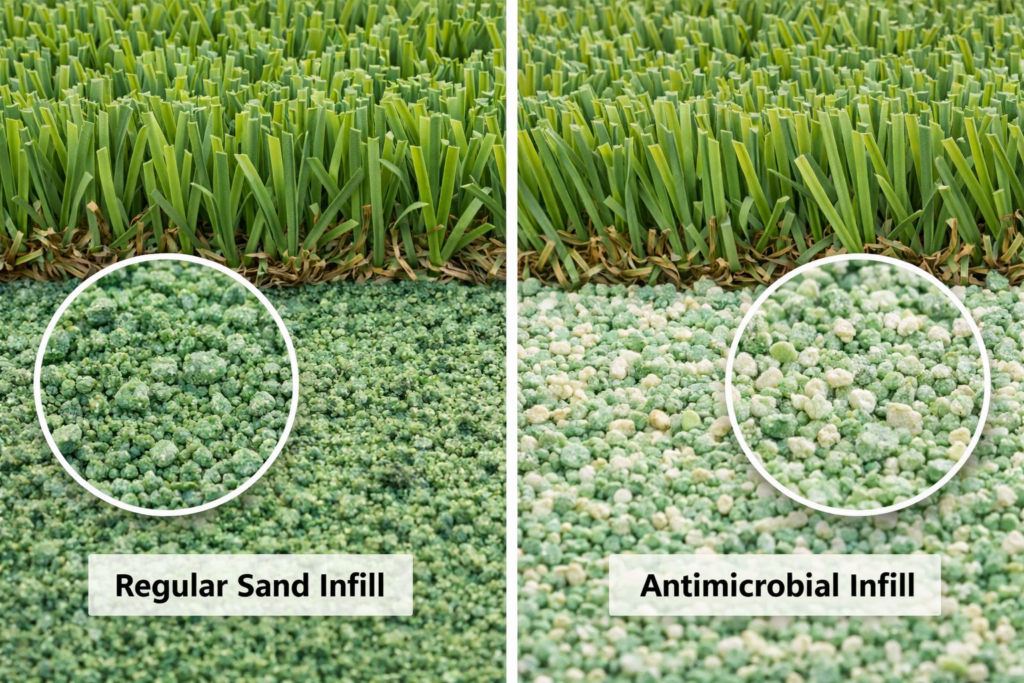
Pet turf installations often include antimicrobial infill materials.
These infill products help reduce bacteria growth and odor development.
Antimicrobial infill contains treated sand or mineral blends.
These materials neutralize ammonia buildup from pet urine.
Proper infill distribution improves drainage flow across turf surfaces.
Balanced infill also supports fiber stability and surface durability.
Premium turf systems combine antimicrobial infill with permeable backing technology.
These combined systems maximize sanitation performance.
Homeowners comparing turf product quality can review our Budget vs Premium Artificial Turf authority page here.
Turf Fiber Selection for Pet Durability and Hygiene
Pet turf requires durable fiber construction to withstand repeated traffic.
Dense fiber stitch rates prevent turf matting and moisture retention.
Premium polyethylene fibers resist odor absorption and staining.
Low-quality fibers may trap organic residue and discolor over time.
Shorter fiber height improves sanitation rinsing efficiency.
Shorter turf allows faster cleaning and moisture evaporation.
Proper fiber memory helps turf maintain natural appearance after heavy pet use.
Durable fiber selection supports long-term sanitation performance.
Homeowners concerned about turf lifespan can review our How Long Artificial Turf Lasts in North Texas authority page here.
Cleaning and Maintenance Practices That Protect Pet Turf Sanitation
Routine cleaning preserves sanitation and odor resistance in pet turf systems.
Homeowners typically rinse turf surfaces after heavy pet activity.
Periodic brushing maintains fiber positioning and airflow between fibers.
Proper brushing improves evaporation and surface drying.
Professional deep cleaning removes organic debris buildup when necessary.
Annual inspections ensure drainage and seam integrity remain intact.
Artificial pet turf eliminates mud, digging damage, and lawn patch replacement.
Homeowners comparing maintenance demands can review our Artificial Turf Maintenance in North Texas guide here.
Heat Management and Pet Comfort on Artificial Turf Surfaces
Pet safety requires comfortable surface temperatures during summer months.
Artificial turf absorbs less heat than concrete or stone surfaces.
Cooling turf fibers reflect infrared heat and reduce surface temperature.
Cooling infill materials further improve pet comfort.
Strategic shade design reduces turf surface heat during peak sunlight.
Trees, pergolas, and patio covers improve summer usability.
North Texas summers create extreme heat exposure for outdoor surfaces.
Proper turf selection protects pets from heat-related injury.
Homeowners concerned about turf heat safety can review our Artificial Turf Heat and Safety in Texas authority page here.
Designing Pet Turf Zones for Yard Functionality and Drainage
Pet turf layouts often include dedicated activity and relief zones.
Separate turf zones improve sanitation and yard organization.
Drainage planning supports pet relief areas with enhanced moisture management.
Installers may integrate subsurface drainage beneath heavy-use areas.
Pet turf designs often integrate outdoor living and recreational yard zones.
Artificial turf reduces mud tracking into homes and pool environments.
Homeowners designing full yard turf layouts often compare natural grass alternatives.
For landscaping comparisons, review our Artificial Turf vs Natural Grass in North Texas guide here.
Many Allen homeowners install pet-specific turf systems to improve drainage and maintain clean backyard environments for daily family use.
Many homeowners research turf installations in North Texas areas such ass Celina, Prosper, Westlake, and Southlake before selecting contractors.
Moisture Control and Mold Prevention in Pet Turf Systems
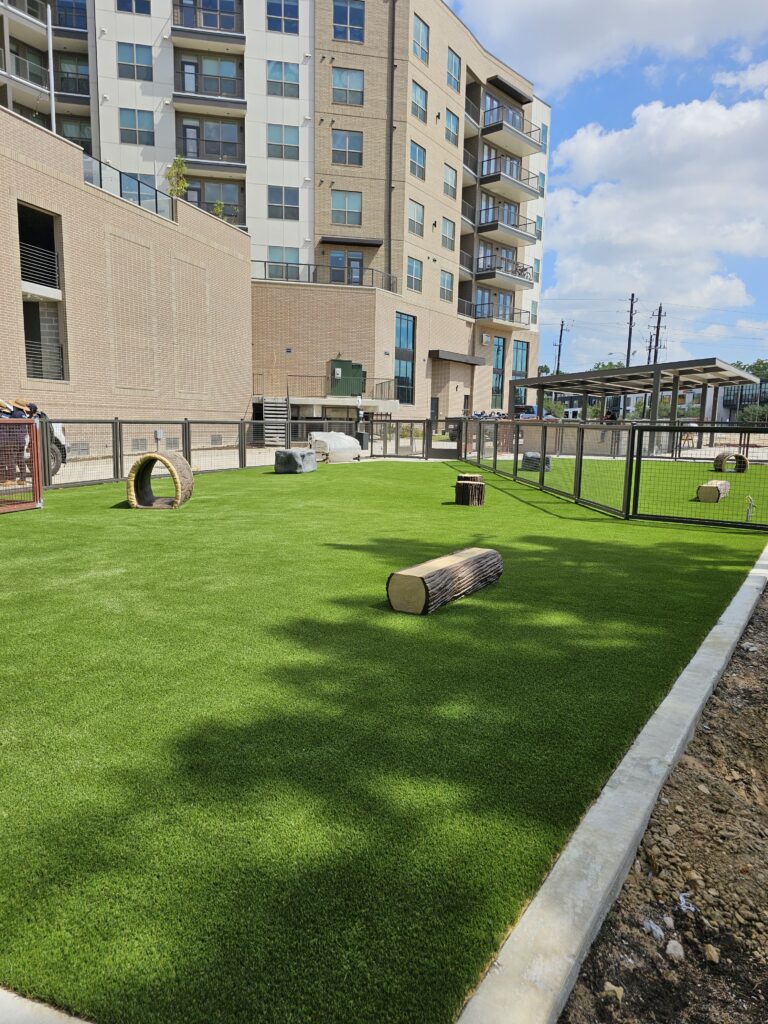
Pet turf installations experience increased moisture exposure from cleaning and weather.
Moisture control prevents mold growth and bacterial contamination.
Professional turf systems use permeable backing and aggregate base layers.
These materials promote airflow and moisture evaporation beneath turf.
Organic debris accumulation increases mold growth risk.
Routine cleaning removes debris and maintains sanitation performance.
North Texas humidity increases moisture retention risks in shaded yard areas.
Engineered drainage systems reduce long-term moisture accumulation.
To understand drainage science protecting turf sanitation, review our Artificial Turf Drainage in North Texas authority page here.
Proper base construction also supports sanitation stability.
Homeowners can review our Turf Base Preparation in North Texas authority guide here.
Why Professional Installation Determines Pet Turf Sanitation Performance
Pet turf requires engineering expertise beyond traditional landscaping installation.
Improper grading or drainage planning causes odor and sanitation failure.
Professional installers evaluate soil composition and yard slope before installation.
Engineering prevents long-term sanitation and drainage issues.
Pet turf installations combine durability, sanitation, and recreational design.
Experienced installation ensures long-term performance and odor resistance.
Homeowners researching turf seam quality can review our Why Artificial Turf Seams Show authority page here.
Create a Clean, Odor-Resistant Pet Turf Environment
OhMyYard designs pet-friendly artificial turf systems across North Texas.
Our installations prioritize sanitation, durability, and drainage performance.
Schedule a consultation to explore pet turf design options today.