
Why Artificial Turf Prices Vary So Much in North Texas
Artificial turf pricing in North Texas ranges widely for a reason.
Two projects with the same square footage can differ by thousands of dollars while using turf that looks similar at first glance.
These price gaps reflect differences in system design, site preparation, material quality, and installation execution. Understanding what drives pricing helps homeowners evaluate quotes accurately and avoid costly long-term issues.
Per-square-foot pricing oversimplifies artificial turf installation.
It ignores site conditions, drainage requirements, base construction, and labor complexity.
North Texas properties vary significantly in soil composition, slope, shade, and water flow. These factors directly affect installation cost and long-term performance. A flat, dry yard requires a different system than a sloped property with clay soil and poor drainage.
Homeowners in cities like Celina, Prosper, Westlake, and Southlake often see these differences firsthand, where clay-heavy soil, flat grading, and runoff patterns can change installation requirements dramatically from one property to the next.
When contractors price turf without accounting for these variables, corners get cut elsewhere.
*Prices in photo are examples only.

Base Construction Is the Biggest Price Variable
Base preparation determines whether a turf system performs for years or fails early.
Lower-priced installations often reduce excavation depth, skip compaction steps, or use inconsistent aggregate layers. These shortcuts save money upfront but lead to surface movement, visible seams, and drainage problems.
Proper base construction in North Texas requires:
- Adequate excavation depth
- Stabilized aggregate layers
- Mechanical compaction
- Grade control for water movement
These steps increase cost but protect performance.
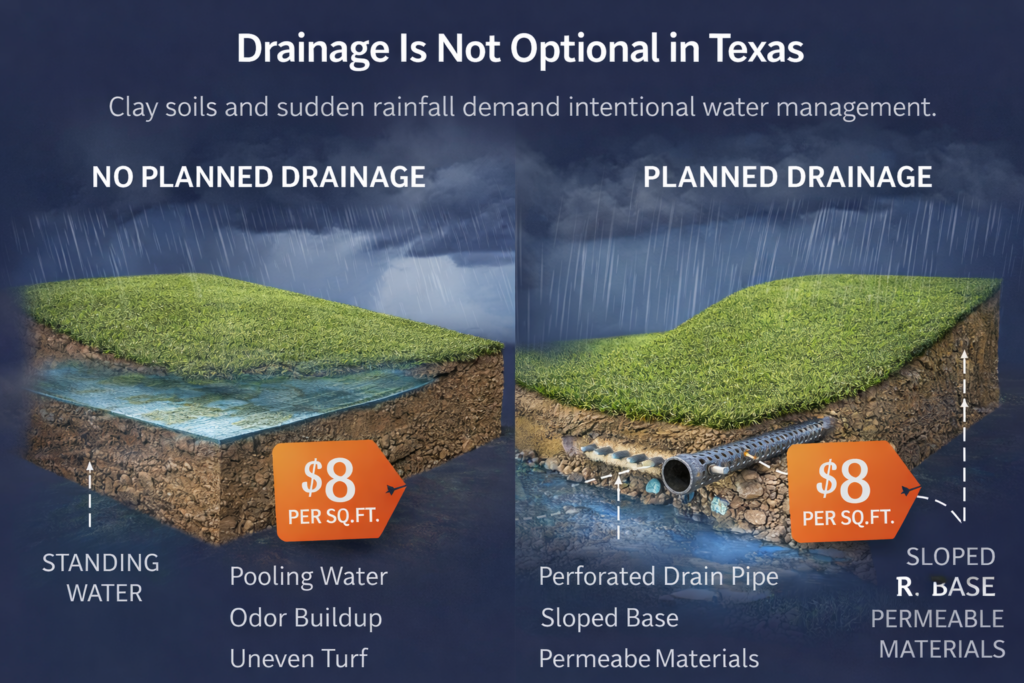
Drainage design significantly affects turf pricing.
Clay soils and sudden rainfall demand intentional water management.
Systems without drainage planning often experience pooling, odor retention, and uneven surfaces. Correcting these failures later costs more than building them correctly from the start.
Higher-priced installations typically include:
- Sloped grading
- Drainage channels
- Permeable base materials
- Water flow testing
These elements increase installation cost while reducing long-term risk.
*Prices in photo are examples only
Turf Material Quality Matters
Low Cost Turf
Premium Turf
Material cost differences affect durability, appearance, and maintenance requirements. Premium turf costs more because it performs better under real-world use.
Installation execution creates pricing separation even when materials appear similar.
Experienced crews spend more time on layout planning, seam alignment, and edge restraint. They control fiber direction, infill distribution, and finishing details that prevent visible flaws.
Lower-priced bids often reduce labor hours or crew experience to meet pricing targets. These compromises show up after installation, not during the estimate.
*Prices in photo are examples only.

Why Cheap Quotes Often Look Appealing
Lower quotes usually remove steps homeowners cannot see.
These reductions may include:
- Shallower excavation
- Fewer compaction passes
- Minimal drainage design
- Faster installation timelines
The turf may look acceptable on day one.
Problems surface months later when repairs become unavoidable.

Why Prices Vary So Widely
Artificial turf pricing reflects risk management.
Higher-quality systems reduce long-term maintenance, repairs, and replacement costs.
In North Texas, proper installation protects against soil movement, heavy rainfall, heat exposure, and frequent use. Those protections require additional materials, labor, and planning.
That investment explains the price difference.
What Most Homeowners Misunderstand About Turf Pricing
How to Compare Two Turf Quotes the Right Way
- Compare base depth and material
- Base depth and aggregate type determine how well the turf surface stays level over time. Shallow or poorly graded bases often lead to movement, uneven areas, and premature failure, regardless of turf quality.
- Review drainage scope
- Drainage scope should account for slope, runoff paths, and soil conditions specific to the property. Quotes that assume “standard drainage” often exclude necessary corrections that prevent pooling and long-term surface issues.
- Confirm seam layout method
- Seam visibility depends heavily on layout planning and installation technique. Proper seam orientation, tight tolerances, and professional joining methods reduce separation and visible lines as the turf ages.
- Ask about compaction process
- Compaction is not a single step but a controlled process performed in multiple passes. Inadequate compaction leads to settling, low spots, and uneven wear, especially in high-traffic areas.
- Understand warranty coverage
- Warranty terms vary widely and often exclude issues related to base failure or drainage problems. Understanding what is covered—and what is not—helps determine whether a lower price reflects reduced long-term protection.
FAQs
Why do turf quotes vary so much for similar yards?
Even similar-looking yards can require very different base work, drainage correction, and labor. Quotes often vary based on what is included beneath the turf, not just the surface material.
Does higher face weight always mean better turf?
No. Face weight measures fiber density, not overall system performance. Base construction, infill selection, seam execution, and drainage have a greater impact on durability than fiber weight alone.
How much does drainage affect long-term cost?
Drainage plays a major role in long-term performance and maintenance. Poor drainage often leads to settling, odors, seam failure, and costly repairs that exceed initial installation savings.
Why do seams fail over time?
Seams fail due to improper layout, inadequate base support, or poor bonding methods. Movement beneath the turf places stress on seams, making installation technique critical for longevity.
Is budget turf ever a good option?
Budget turf can work for low-use areas with minimal drainage challenges. It is generally not suited for high-traffic, pet-heavy, or long-term performance-focused installations.