
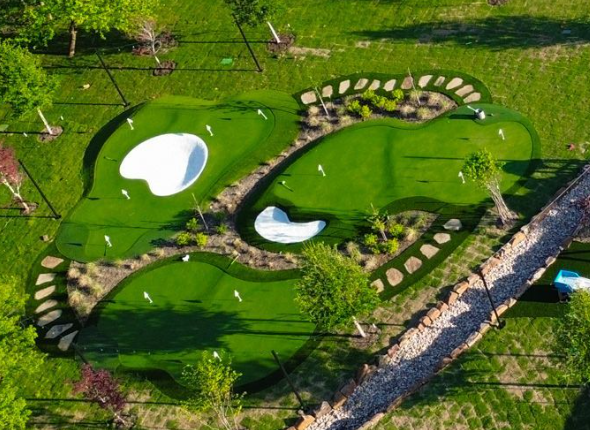
Artificial Turf Putting Greens Designed for Real Golf Performance in North Texas
Artificial turf putting greens create consistent backyard golf experiences when designed correctly.
Performance depends on turf selection, base construction, and contour shaping.
Many backyard greens look attractive but perform poorly.
Speed, ball roll, and drainage often separate quality installations from cosmetic ones.
North Texas weather and clay soil increase installation complexity.
Professional engineering ensures putting greens remain consistent across seasonal changes.
Homeowners choose artificial greens to practice daily without course maintenance.
Well-built greens provide realistic roll, durability, and long-term stability.
To understand how professional turf systems are built, explore our full artificial turf installation process here.
Why Backyard Putting Green Performance Requires Specialized Turf Systems
Putting greens demand higher precision than lawn turf installations.
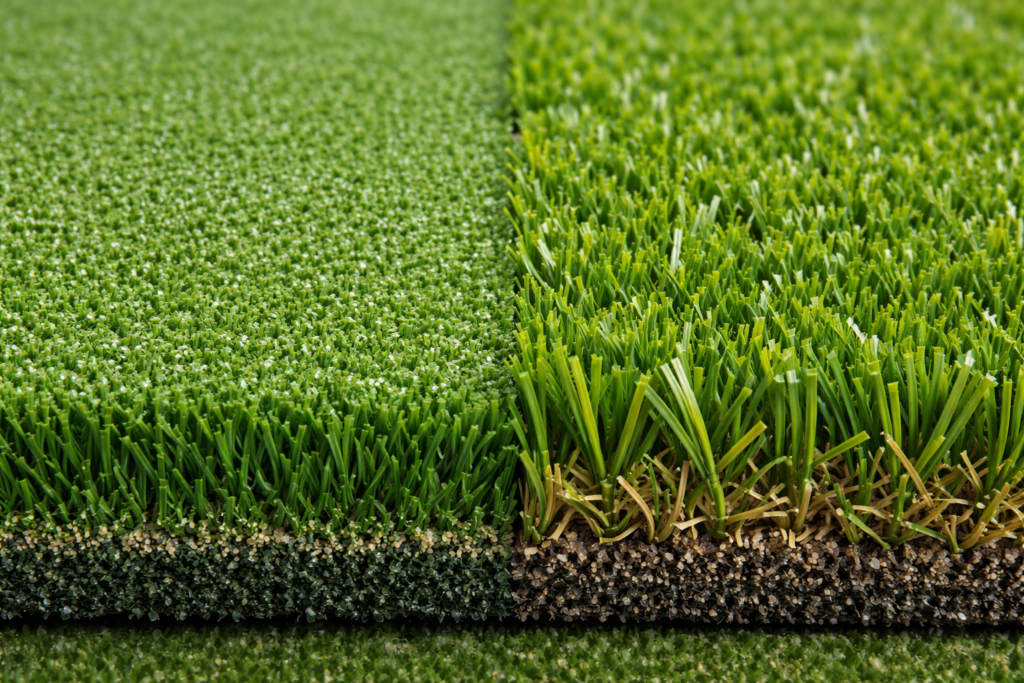
Golf performance requires specialized fibers, dense stitch rates, and precision grading.
Standard turf systems cannot replicate putting performance.
Low-density turf creates inconsistent ball roll and unpredictable speeds.
Premium golf turf mimics professional practice surfaces.
Fiber height, fiber memory, and backing structure influence performance.
North Texas climate increases turf system stress.
Heavy rain, extreme heat, and clay expansion require engineered subsurface design.
Our turf systems use professional base construction similar to sports surfaces.
This design ensures stability, drainage, and long-term performance.
Homeowners comparing turf performance can review our Budget vs Premium Artificial Turf guide here.
Understanding Putting Green Speed and Ball Roll Performance
Golf putting greens measure speed using a stimpmeter rating.
Speed determines how quickly a golf ball rolls across the surface.
Backyard greens typically range between 8 and 11 on the stimpmeter scale.
Higher speeds replicate tournament-style practice conditions.
Turf density and infill materials control surface speed.
Dense fibers create smoother ball roll and reduce bounce.
Proper seam construction prevents ball deviation.
Poor seam placement causes inconsistent ball movement across putting lines.
Base compaction also controls roll consistency.
Improper base preparation creates surface settling and performance loss.
To learn how base engineering affects turf stability, review our Turf Base Preparation in North Texas page here.
Contour Shaping and Multi-Directional Putting Design
Professional putting greens include slope transitions and contour shaping.
Flat greens limit practice value and reduce homeowner engagement.
Engineered contours create realistic practice scenarios.
Breaks, tiers, and directional slopes improve skill development.
Precision grading occurs during excavation and base installation.
Installers shape the surface before turf placement begins.
Proper contour design also improves drainage performance.
Water naturally flows toward drainage exits when slopes are engineered correctly.
Contour planning requires understanding yard grade and drainage flow.
Yards with drainage challenges benefit from integrated grading and water management.
Homeowners experiencing yard drainage problems can review our Artificial Turf Drainage in North Texas authority guide here.
Fringe Turf and Transition Zones Around Putting Greens
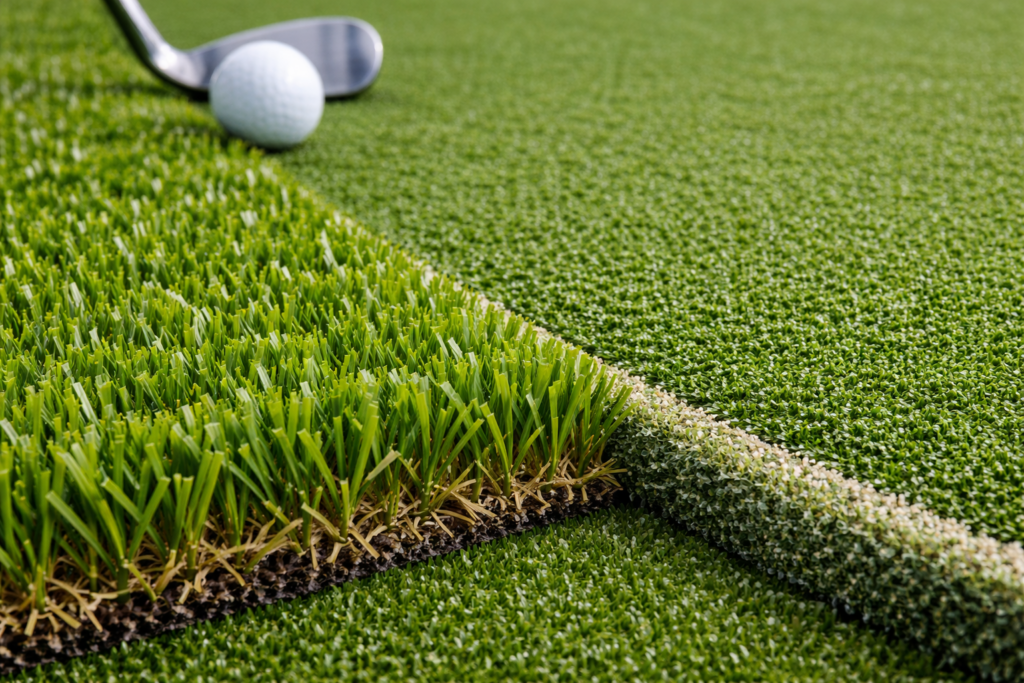
Fringe turf improves realism and visual appearance around greens.
These areas simulate course-style chipping zones and shot transitions.
Fringe turf uses longer fiber height and softer ball interaction.
This design allows controlled chip shots and shot variety.
Proper fringe integration prevents seam visibility between turf surfaces.
Incorrect transitions create unnatural edges and ball interference.
Professional fringe installation also reduces edge lifting risk.
Edge anchoring and seam design maintain long-term turf stability.
Homeowners concerned about seam visibility can review our Why Artificial Turf Seams Show authority page here.
Drainage and Subsurface Engineering for Putting Greens
Putting greens require aggressive drainage planning in North Texas.
Clay soil retains water and creates subsurface movement during rainfall.
Proper excavation removes unstable organic material.
Installers replace soil with compacted aggregate base layers.
Permeable base systems allow rapid vertical water drainage.
Drainage systems prevent puddling and base instability.
Drainage design protects turf seams and contour integrity.
Standing water often causes seam separation and base settling.
Professional drainage planning supports long-term putting performance.
Homeowners comparing turf durability can review our Artificial Turf Installation Mistakes to Avoid page here.
Choosing the Right Turf Fiber for Backyard Golf Performance
Putting green turf uses shorter, dense nylon or polyethylene fibers.
Fiber memory controls ball roll consistency and surface durability.
Premium putting turf resists flattening during heavy use.
Low-quality turf compresses quickly and reduces performance quality.
Infill selection also impacts putting speed and surface feel.
Sand infill creates smooth ball roll and surface stability.
Specialized cooling infill options reduce surface heat exposure.
Heat management improves summer practice comfort for golfers.
Homeowners evaluating turf comfort can explore our Artificial Turf Heat and Safety in Texas authority page here.
Backyard Putting Greens as Outdoor Living and Property Value Enhancements
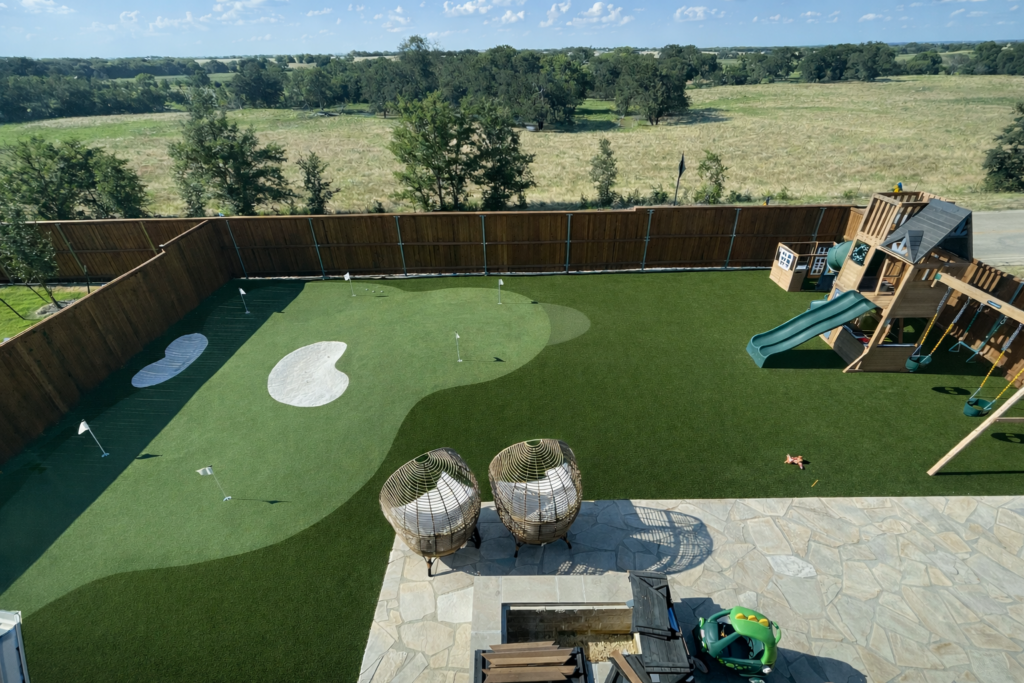
Backyard golf greens enhance luxury outdoor living design.
Homeowners combine greens with patios, pools, and sports courts.
Putting greens increase recreational yard usage year-round.
Artificial turf remains playable during drought or heavy rainfall.
High-quality greens can increase property market appeal.
Luxury outdoor living features often influence homebuyer interest.
Homeowners designing outdoor spaces often integrate turf with landscape layouts.
For design inspiration, explore our Artificial Turf vs Natural Grass in North Texas comparison here.
Residents researching turf projects often review installations in North Texas areas such as Celina, Prosper, Westlake, and Southlake before selecting contractors.
Maintenance Requirements for Artificial Turf Putting Greens
Artificial putting greens require simple routine maintenance.
Maintenance preserves surface speed, fiber integrity, and visual appearance.
Homeowners brush turf periodically to maintain fiber position.
Debris removal prevents surface contamination and drainage blockage.
Occasional infill leveling maintains consistent putting performance.
Professional inspections ensure seams and edging remain secure.
Artificial greens eliminate mowing, fertilizing, and irrigation expenses.
Homeowners comparing maintenance needs can review our Artificial Turf Maintenance in North Texas guide here.
Why Professional Installation Determines Golf Performance Results
Backyard putting greens require specialized installation experience.
Improper grading or base compaction reduces performance and lifespan.
Professional installers evaluate yard slope, drainage, and soil composition.
Engineered installations deliver consistent roll and long-term durability.
Putting green design combines sports performance and landscape construction.
Experienced installers coordinate contour shaping, drainage integration, and seam placement.
Homeowners researching turf lifespan should review our How Long Artificial Turf Lasts in North Texas authority page here.
Start Designing Your Backyard Golf Putting Green
OhMyYard designs custom artificial turf putting greens across North Texas.
Our installations focus on performance, durability, and realistic golf practice experiences.
Schedule a consultation to explore backyard golf design options today.