
Artificial Turf Solutions for Sloped Yards and Erosion Control in North Texas
Artificial turf stabilizes sloped yards and prevents erosion when installed with proper engineering.
Slope landscapes create drainage challenges and soil movement risks across North Texas properties.
Many natural grass slopes fail due to runoff and soil washout.
Artificial turf provides reinforced ground coverage and improved drainage control.
North Texas clay soil expands and contracts during seasonal weather changes.
Professional turf installations stabilize slopes and reduce long-term yard deterioration.
Homeowners choose slope turf systems to improve yard usability and property appearance.
Engineered turf solutions protect landscapes from erosion and drainage damage.
To understand how turf systems are professionally installed, review our complete artificial turf installation process here.
Why Sloped Yards Create Drainage and Erosion Challenges in North Texas
Sloped properties, such as those commonly found in Flower Mound accelerate water runoff during heavy rainfall.
Rapid runoff often removes topsoil and damages natural grass coverage.
Clay soil increases slope instability across North Texas landscapes.
Clay expands when wet and contracts during dry weather cycles.
Slope erosion exposes roots, destabilizes foundations, and damages yard structures.
Poor drainage increases erosion risk and surface deterioration.
Artificial turf stabilizes slopes by anchoring surface materials and controlling water flow.
Professional slope design protects yards from long-term erosion damage.
Homeowners concerned about drainage performance can review our Artificial Turf Drainage in North Texas authority page here.
Engineering Base Preparation for Turf Installation on Sloped Terrain
Slope turf installations require reinforced excavation and base preparation.
Installers remove unstable soil and organic debris before construction begins.
Engineered aggregate bases stabilize slopes and improve drainage performance.
Compacted base layers support turf anchoring and prevent shifting.
Slope installations often require deeper base construction compared to flat yards.
Additional compaction improves long-term turf stability on inclined surfaces.
Improper base construction causes turf wrinkling and seam separation on slopes.
Homeowners concerned about base preparation quality can review our Turf Base Preparation in North Texas authority guide here.
Turf Anchoring Systems and Seam Stability on Sloped Installations
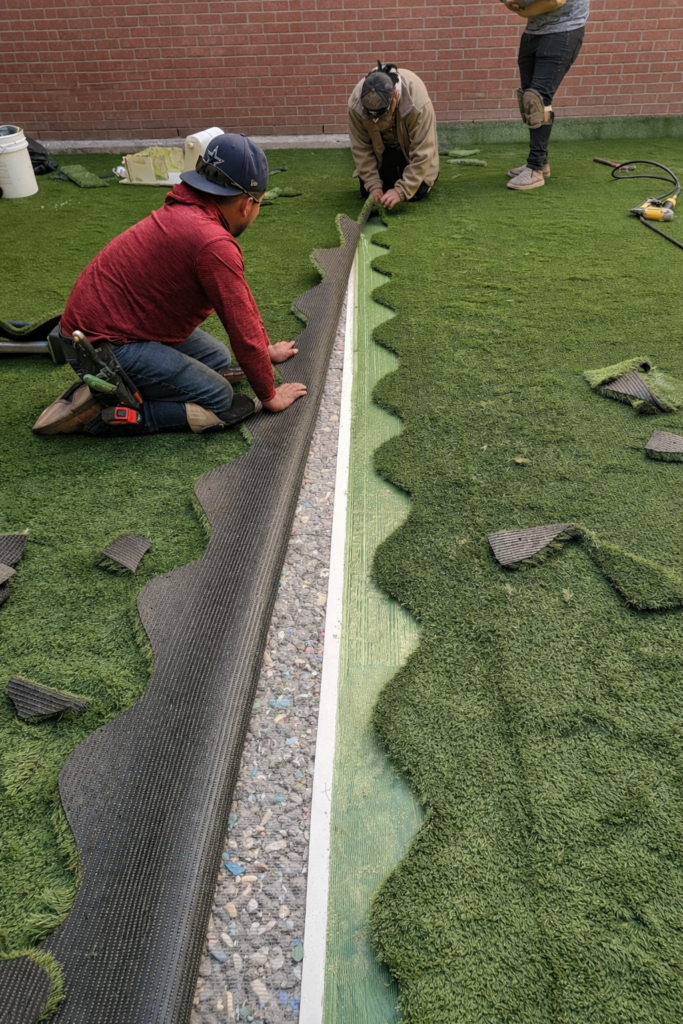
Slope turf installations require reinforced anchoring systems to prevent movement.
Professional installers secure turf using concealed anchoring and edging systems.
Anchoring prevents turf sliding during heavy rainfall and surface traffic.
Improper anchoring often causes seam lifting and edge separation.
Seam placement remains critical on sloped surfaces.
Professional seam alignment maintains natural appearance and structural integrity.
Slope installations increase stress on turf seams and edges.
Homeowners concerned about seam durability can review our Why Artificial Turf Seams Show authority page here.
Artificial Turf for Erosion Control and Soil Stabilization
Artificial turf protects sloped yards from rainfall erosion and soil washout in North Texas.
Turf fibers reduce surface water velocity during heavy storms.
Properties in Justin and Lucas often feature larger open areas, making erosion control and water management essential components of any long-term turf installation.
Aggregate base layers promote vertical water drainage beneath turf surfaces.
Drainage reduces runoff and soil displacement across slopes.
Slope turf installations often integrate erosion control barriers beneath base layers.
These systems improve soil retention and structural stability.
Erosion control turf systems protect landscape plantings and yard structures.
Professional slope engineering prevents property damage and landscape deterioration.
Homeowners comparing turf durability can review our How Long Artificial Turf Lasts in North Texas authority page here.
Designing Turf Slopes With Retaining Walls and Terrace Landscaping
Many slope turf installations integrate retaining walls and terrace yard design.
Retaining walls stabilize elevation changes and improve drainage management.
Terrace landscaping improves yard usability on steep properties.
Multi-level turf designs create recreational and outdoor living spaces.
Professional terrace planning prevents soil shifting and water pooling between levels.
Proper drainage integration supports long-term slope stability.
Retaining wall integration improves visual appearance and property value.
Slope landscaping often complements luxury outdoor living environments.
Homeowners designing outdoor living turf layouts can review our Artificial Turf Yard Design and Layout Planning authority page here.
Turf Installation for Hillside Recreation and Functional Yard Space
Sloped turf installations allow homeowners to convert unusable hills into recreation areas.
Slope turf supports family play zones and outdoor activity spaces.
Professional slope grading creates stable recreational surfaces.
Improper slope turf installation often creates unsafe and unstable play areas.
Recreation turf improves yard accessibility and reduces slip hazards.
Turf surfaces improve traction compared to natural grass slopes.
Families often combine slope turf with pet and recreation yard zones.
Homeowners designing pet-friendly slope turf can review our Artificial Turf Pet Sanitation and Odor Control authority page here.
Integrating Turf Slopes With Outdoor Living and Pool Landscapes
Artificial turf slopes often surround outdoor living and pool environments.
Slope turf installations improve transitions between yard elevations and recreation zones.
Professional slope drainage protects pool decks and patio areas.
Water runoff from slopes can damage pool landscapes without proper turf engineering.
Slope turf reduces mud tracking into outdoor entertainment spaces.
Integrated slope turf improves yard accessibility and visual continuity.
Homeowners designing pool landscapes can review our Artificial Turf Around Pools authority page here.
Many homeowners research turf installations in North Texas areas such as Celina, Prosper, Westlake, and Southlake before selecting contractors.
Maintenance Requirements for Turf Slopes and Hillside Installations
Artificial turf slopes require minimal maintenance compared to natural grass hillsides. This can be especially helpful in the natural topographies found in Keller.
Homeowners eliminate mowing and erosion repair across slope landscapes.
Routine inspection ensures slope anchoring and drainage systems remain secure.
Debris removal protects drainage flow and turf appearance.
Professional inspections help identify early slope movement or seam stress.
Proper maintenance extends turf slope lifespan and performance.
Homeowners evaluating turf maintenance requirements can review our Artificial Turf Maintenance in North Texas authority page here.
Why Professional Installation Determines Slope Turf Stability and Safety
Slope turf installation requires landscape engineering expertise beyond standard turf installation.
Improper grading or anchoring often causes turf failure and erosion damage.
Professional installers evaluate slope angle, soil composition, and drainage patterns before installation.
Engineering prevents long-term slope instability and safety risks.
Artificial turf slope installations combine erosion control, drainage engineering, and landscape design.
Experienced installation ensures long-term durability and visual performance.
Homeowners researching turf installation errors can review our Artificial Turf Installation Mistakes to Avoid authority page here.
Stabilize Your Sloped Yard With Artificial Turf Engineering
OhMyYard designs artificial turf erosion control and slope stabilization systems across North Texas.
Our installations prioritize drainage, stability, and long-term landscape protection.
Schedule a consultation to explore slope turf solutions today.