
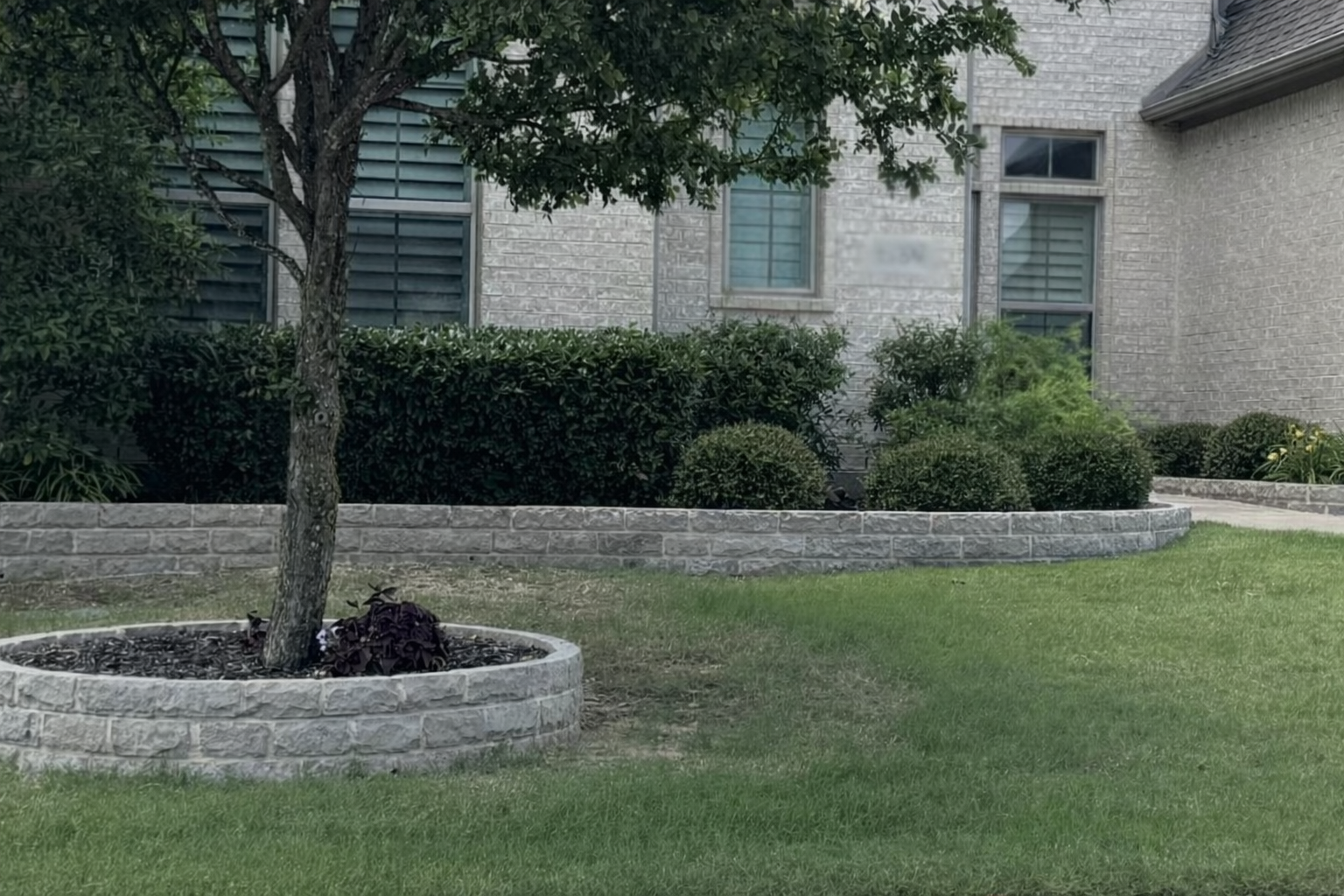
Flower Bed Edging: Brick vs Stone vs Concrete Borders
Why Flower Bed Edging Matters More Than Most Homeowners Realize
Flower bed edging does more than create a clean visual line between landscape areas. When properly installed, edging controls soil migration, protects turf boundaries, improves drainage behavior, and reduces long-term maintenance. However, when installed poorly or built with the wrong material, edging can shift, separate, or deteriorate within just a few seasons.
In North Texas communities like Celina, Prosper, Frisco, and McKinney, edging performance depends heavily on soil conditions. Expansive clay soils expand during wet periods and contract during drought, which places constant stress on landscape borders. Because of this movement, material choice and installation quality matter significantly more than many homeowners expect.
At OhMyYard, we evaluate edging as a structural landscape component rather than just a decorative finish. Our in-house crews design borders that hold alignment, resist movement, and integrate cleanly with surrounding hardscape and turf systems.
Installation Fundamentals: What Determines Long-Term Performance
Before comparing materials, it is important to understand that installation quality often determines edging lifespan more than the product itself.
Proper Trenching and Base Preparation
Professional edging installation begins with controlled trenching along the bed perimeter. Our crews excavate to create a stable channel that supports the border material. In many North Texas applications, we install a compacted base layer to reduce future movement.
Shallow installs placed directly on native soil often shift within the first seasonal cycle. Proper base preparation dramatically improves stability.
Alignment and Restraint
Clean alignment separates premium edging from basic landscape work. We string-line all borders to maintain consistent curves and straight runs. For certain applications, we also install edge restraints or concrete toe support to lock materials in place.
Without proper restraint, edging can creep outward over time, especially in clay-heavy properties.cal.
Drainage Considerations
Water movement plays a major role in edging longevity. Poor drainage can soften surrounding soil and accelerate shifting. During installation, we evaluate how water flows through the landscape and adjust grading when necessary.
Brick Edging: Classic and Structured
Brick edging remains one of the most popular choices for North Texas homeowners. It provides a clean, traditional look that pairs well with many home styles.
Advantages of Brick Edging
Brick offers strong visual consistency and works especially well with paver patios and traditional landscape designs. When installed on a proper base with mortar or concrete restraint, brick borders can maintain alignment for many years.
Additionally, brick typically provides a more uniform appearance than natural stone, which appeals to homeowners who prefer clean lines.
Limitations to Consider
Brick edging can shift if installed without adequate base support. Mortared installations improve stability but increase labor cost. Over time, color fading may occur depending on product quality and sun exposure.
Stone Edging: Natural and High-End
Stone borders deliver a more organic, upscale appearance. Many homeowners in Frisco and McKinney choose stone when building premium outdoor environments.
Advantages of Stone Edging
Natural stone provides strong visual texture and blends well with native landscape themes. It also offers excellent durability when properly installed. Larger stone pieces resist minor soil movement better than thin materials.
For high-end outdoor living projects, stone edging often creates the most architectural look.
Limitations to Consider
Stone typically costs more than brick or concrete options. Installation also requires more skill to maintain consistent alignment. Without proper base preparation, irregular shapes can create gaps or settling over time.
Concrete Edging: Continuous and Budget-Friendly
Concrete landscape curbing provides a continuous border formed on site. It often appeals to homeowners seeking a clean edge at a lower price point.
Advantages of Concrete Edging
Concrete curbing creates a seamless, uniform border that effectively separates turf from planting beds. Installation can move quickly, which sometimes reduces upfront cost compared to unit materials.
When properly reinforced and installed on stable soil, concrete edging can perform reliably in many residential settings.
Limitations to Consider
Because concrete forms a rigid strip, it can crack in expansive clay environments. Repairs usually require patching or replacement of sections rather than simple resets.
Design flexibility also remains more limited compared to brick or stone systems.
Benefits of Professionally Installed Flower Bed Edging
Cleaner Landscape Separation
Proper edging creates a sharp boundary between turf and planting areas. This improves curb appeal and makes routine maintenance easier.
Reduced Soil Migration
Engineered borders help keep mulch and soil in place during heavy rain events. This reduces washout and preserves bed definition.
Improved Maintenance Efficiency
Defined edges make mowing, trimming, and bed upkeep more efficient. Homeowners often notice immediate time savings after installation.
Stronger Long-Term Alignment
Professionally installed edging resists shifting better than surface-level products. Proper trenching and compaction make a measurable difference over time.
Better Integration With Hardscapes
Quality edging ties together patios, turf, and planting areas into one cohesive design. This creates a more finished outdoor appearance.
Enhanced Property Appeal
Well-defined landscape borders consistently improve perceived home value in Celina and Prosper neighborhoods.
Key Factors Homeowners Should Consider
Before choosing edging material, homeowners should evaluate soil conditions, desired appearance, and long-term maintenance expectations. Properties with heavy clay often benefit from more robust base preparation regardless of material choice.
Budget also plays a role, but lowest upfront cost rarely delivers the best long-term performance. In many cases, investing slightly more in proper installation prevents premature movement and repair expenses.
Finally, installer experience matters. Even premium materials can fail when crews skip trench depth, compaction, or drainage evaluation. Working with an experienced in-house team like OhMyYard helps ensure the edging performs as intended.
Frequently Asked Questions
What is the most durable flower bed edging material?
Durability depends on both material and installation quality. Stone and properly installed brick typically perform very well in North Texas, especially when supported by a compacted base.
Does concrete landscape edging crack?
Concrete edging can crack over time, particularly in expansive clay soil. Proper installation helps reduce risk, but rigid systems remain more vulnerable than segmented materials.
How deep should flower bed edging be installed?
Most professional installations include trenching several inches below grade with base preparation as needed. Depth varies based on soil conditions and material type.
Is flower bed edging worth the investment?
Yes. Quality edging improves curb appeal, reduces maintenance, and helps protect surrounding turf and hardscape features when installed correctly.