North Texas Clay Soil Impact on Hardscape Longevity
Why Clay Soil Drives Most Hardscape Failures
North Texas clay soil impact on hardscapes causes homeowners to face a unique challenge that many regions do not encounter at the same scale. Expansive clay soil dominates much of the DFW area, including Southlake, Celina, Prosper, Frisco, and McKinney. This soil type expands when it absorbs moisture and contracts during dry periods, which creates constant ground movement beneath outdoor surfaces.
Because of this cycle, hardscape installations in North Texas must handle far more stress than similar projects in stable sandy or rocky soils. Patios, retaining walls, turf systems, and walkways all depend on the ground beneath them. When installers ignore soil behavior, even attractive new projects can begin showing problems within a few seasons.
At OhMyYard, we design every outdoor system with clay movement in mind. Our in-house crews adjust excavation depth, base preparation, and drainage strategy to match real North Texas conditions rather than relying on generic installation methods.
How Expansive Clay Soil Behaves
Understanding clay movement helps explain why certain installations succeed while others fail.
Expansion During Wet Periods
Clay soil absorbs water quickly during heavy rain events. As moisture levels rise, the soil expands and increases in volume. This expansion creates upward and lateral pressure beneath hardscape surfaces.
In North Texas, spring storms and irrigation cycles often trigger this swelling phase. When base preparation is shallow or poorly compacted, patios and walkways may begin to heave or shift.
Contraction During Dry Conditions
During hot summer months and drought periods, clay soil loses moisture and shrinks. This shrinkage can create small voids beneath hardscape surfaces.
When the soil later rehydrates, it expands again, but not always uniformly. Over time, this repeated movement can lead to uneven settling, joint separation, or structural stress in rigid installations.al.
Seasonal Movement Cycles
The real challenge comes from repetition. North Texas clay does not move once and stop. Instead, it cycles through expansion and contraction year after year.
Installations that fail to account for this movement often show:
- Drainage disruption
- Surface cracking
- Edge separation
- Paver settling
- Retaining wall lean
Hardscape Features Most Affected by Clay Soil
Not all outdoor features respond to clay movement the same way. Some systems handle it better than others.
Concrete Patios and Slabs
Concrete surfaces remain particularly vulnerable because they function as rigid plates. When the soil beneath moves unevenly, the slab must absorb the stress.
Common concrete issues in North Texas include:
- Trip hazards
- Hairline cracking
- Surface fractures
- Differential settling
Paver Patios and Walkways
Paver systems generally perform better in clay environments because they allow minor flex within the interlocking system. However, performance still depends heavily on proper base depth and compaction.
Poorly installed pavers can still experience:
- Joint separation
- Edge creep
- Low spot settling
Retaining Walls
Retaining walls face two separate pressures in clay soil: lateral soil load and moisture-driven expansion. Without proper drainage and reinforcement, walls may lean forward over time.
This risk increases in newer Celina and Prosper subdivisions where grading patterns concentrate water behind walls.
Artificial Turf Installations
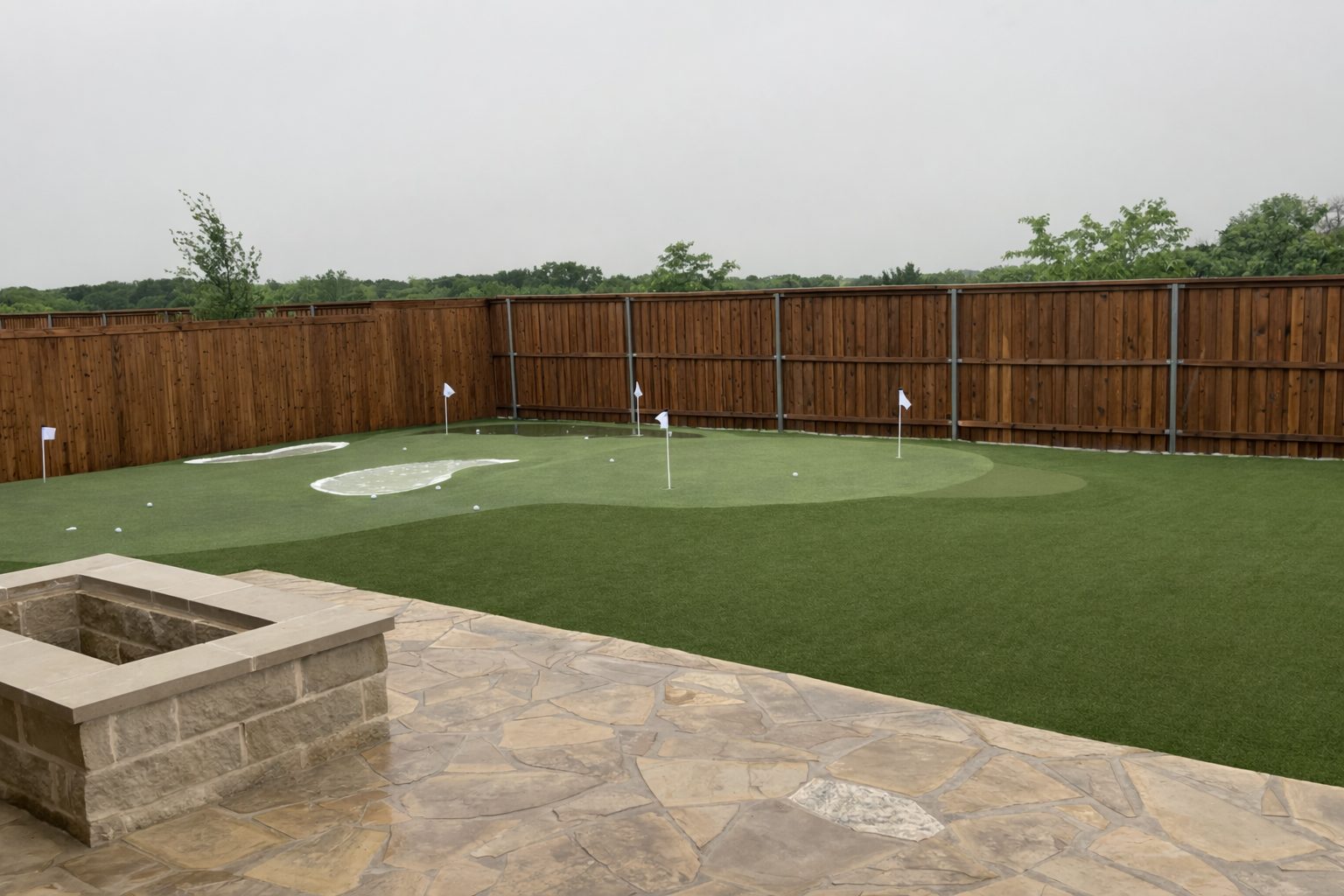
Turf systems depend on a stable aggregate base. When installers skip proper excavation or compaction, clay movement can create surface undulations that become visible through the turf.
Professional base preparation significantly reduces this risk.
Engineering Strategies That Reduce Clay Soil Risk
While no contractor can eliminate soil movement entirely, proper installation methods dramatically improve long-term performance.
Deeper Excavation and Base Build-Up
In clay-heavy properties, deeper excavation removes unstable native soil and replaces it with compacted aggregate. This creates a more consistent structural platform.
At OhMyYard, we adjust base depth based on:
- Soil density
- Moisture conditions
- Feature load requirements
- Drainage patterns
This customized approach helps outdoor surfaces perform more reliably over time.
Advanced Compaction Methods
Mechanical compaction in controlled lifts creates a dense, interlocked base. Many installation failures occur because crews rush this step or compact only the surface layer.
Proper compaction reduces void formation during dry cycles and improves load distribution.
Integrated Drainage Planning
Water control remains one of the most effective ways to manage clay behavior. By directing water away from structures and reducing saturation near hardscapes, installers can limit extreme expansion cycles.
Common solutions include:
- Downspout extensions
- French drains
- Channel drains
- Surface grading adjustments
Benefits of Clay-Aware Hardscape Installation
Reduced Structural Movement
Designing for clay conditions helps minimize heaving and settling. This keeps patios, turf, and walls performing more consistently.
Longer Hardscape Lifespan
Installations built with proper excavation and drainage typically last significantly longer than generic builds.
Fewer Costly Repairs
Preventative engineering reduces the likelihood of major corrective work later. Homeowners often save money over the life of the project.
Better Surface Appearance Over Time
Hardscapes that resist movement maintain cleaner lines and more consistent elevations.
Improved Drainage Performance
Coordinated grading and drainage reduce water pooling and soil saturation around outdoor features.
Stronger Property Value Protection
In competitive markets like Frisco and McKinney, well-performing outdoor environments support long-term home value.
Key Considerations for North Texas Homeowners
Before installing any hardscape feature, homeowners should evaluate how clay soil may affect the project. Properties with poor drainage or heavy irrigation often experience more aggressive soil movement.
Project scope also matters. Larger patios, retaining walls, and outdoor kitchens place greater demand on the underlying soil structure. These features benefit most from engineered base preparation and water management.
Most importantly, contractor experience plays a major role. Many installation problems trace back to crews that treat North Texas clay like ordinary soil. Working with an experienced in-house team like OhMyYard helps ensure the project accounts for real regional conditions.
Frequently Asked Questions
Why is clay soil such a problem in North Texas?
Clay expands when wet and shrinks when dry. This constant movement places stress on patios, turf, and retaining walls.
Can hardscapes be installed successfully in clay soil?
Yes. Proper excavation, compaction, and drainage planning dramatically improve performance in clay-heavy environments.
Are pavers better than concrete in clay soil?
In many cases, yes. Paver systems flex slightly under movement, while concrete slabs tend to crack when the ground shifts.
How can I tell if my yard has expansive clay?
Common signs include soil cracking during drought, sticky mud after rain, and noticeable ground movement around structures. A professional site evaluation provides the most reliable assessment.