
Turf Base Preparation in North Texas
Why Proper Groundwork Determines Long-Term Turf Performance
Artificial turf performance begins below the surface.
Base preparation determines drainage, stability, longevity, and appearance.
In North Texas, soil conditions make base construction especially critical.
Homeowners in communities such as Celina, Prosper, Westlake, and Southlake experience these challenges firsthand, where clay-heavy soil and flat grading place additional stress on turf base systems.
Many turf failures trace back to improper groundwork.
Surface issues usually reflect hidden base problems.
No turf product can compensate for poor preparation.
This page explains how proper base systems work.
It also explains why shortcuts cause early failure.
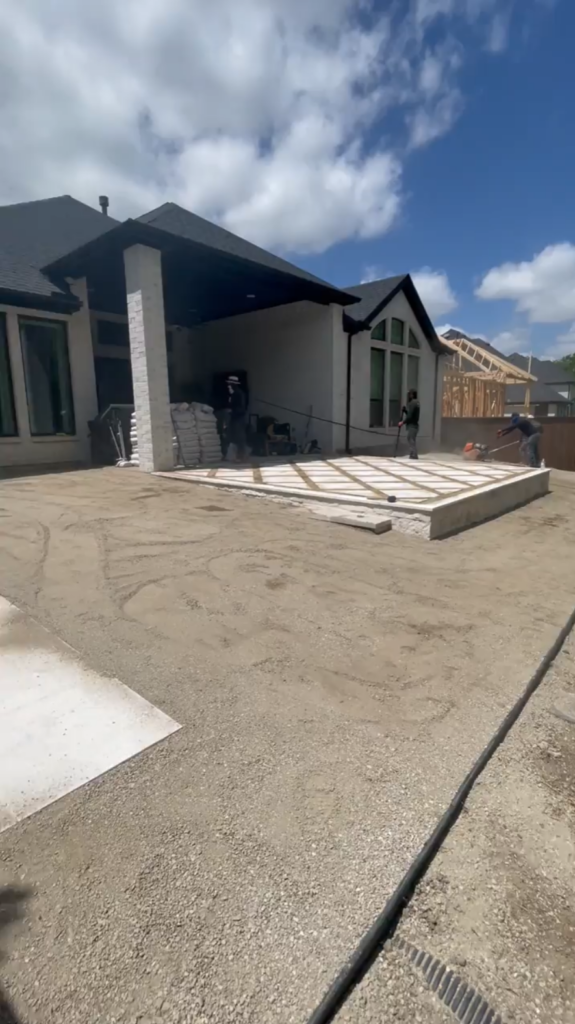
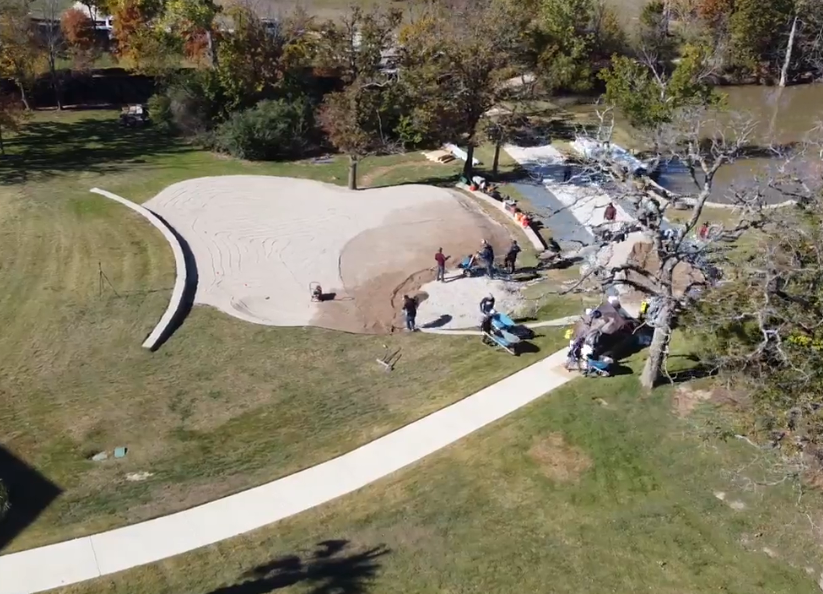
Why Base Preparation Matters More in North Texas
North Texas soils contain heavy clay content.
Clay expands when wet and contracts when dry.
This movement stresses turf systems over time.
Many Carrollton properties sit on expansive clay soil, making proper base preparation and drainage control critical for long-term turf performance.
Seasonal rainfall creates rapid saturation cycles.
Poor drainage traps water beneath turf surfaces.
Standing water weakens base stability and compaction.
High summer temperatures accelerate material breakdown.
Improper bases shift faster under thermal stress.
These conditions magnify installation mistakes.
Successful turf systems account for these regional factors.
They require intentional excavation and compaction.
They also require engineered drainage planning.
To understand OhMyYard’s approach to base preparation, check out our complete installation process HERE.
What Happens When Base Preparation Is Ignored
Improper bases cause surface rippling and depressions.
They also cause visible seams and uneven shading.
These issues worsen with use and weather.
Poor compaction allows aggregate movement.
Movement creates low spots and standing water.
Odor issues often follow in pet areas.
Thin bases crack under foot traffic.
Edges loosen and separate over time.
Repairs often require partial removal.
Many budget installs hide these risks initially.
Problems often appear months later.
At that point, correction costs increase significantly.
Excavation Depth Sets the Foundation
Proper excavation removes organic material.
It also removes unstable soil layers.
Depth varies by usage and site conditions.
High-traffic areas require deeper excavation.
Pet zones require additional depth for drainage.
Slope transitions require precise grading.
Shallow excavation leads to early failure.
Turf may feel firm initially.
The surface eventually settles unevenly.
Professional installations verify depth consistently.
They do not rely on visual estimates.
They measure and adjust across the entire footprint.
Aggregate Selection Impacts Long-Term Stability
Base material choice affects compaction and drainage.
Not all aggregates perform equally.
Angular stone locks together more effectively.
Rounded materials shift under load.
They fail to maintain grade consistency.
Water movement becomes unpredictable.
Quality systems use properly sized aggregate.
They match material to soil conditions.
They avoid mixed or contaminated fill.
Consistent aggregate depth matters.
Uneven layers cause differential settling.
This leads to visible surface distortion.
Compaction Determines Base Strength
Compaction creates a stable base structure.
It removes air pockets between aggregate particles.
Proper compaction prevents future movement.
Installers must compact in lifts.
Each layer requires uniform pressure.
Skipping lifts weakens the entire system.
Hand tamping rarely achieves adequate density.
Mechanical compaction delivers consistent results.
Verification ensures long-term performance.
Poor compaction creates soft zones.
These areas compress under use.
Surface irregularities follow.
Drainage Planning Prevents System Failure
Drainage directs water away from turf systems.
It protects the base from saturation.
It also reduces odor and maintenance issues.
Each yard handles runoff differently.
Slope, soil, and hardscape affect flow.
Effective designs map these paths early.
Subsurface drainage may be required.
French drains or channel drains redirect water.
Grading alone may not suffice.
Ignoring drainage creates long-term problems.
Water accumulates beneath the turf.
The base weakens over time.
Grade Control Maintains Surface Consistency
Proper grading ensures even transitions.
It controls water movement and appearance.
Grade errors create visible flaws.
Professional installs establish reference points.
They maintain consistent elevation across zones.
They adjust for structures and edges.
Uncontrolled grading leads to pooling.
Edges may sit above or below surfaces.
These issues affect usability and aesthetics.
Grade control also impacts seams.
Uneven bases cause tension across joins.
Seams then separate or telegraph through turf.
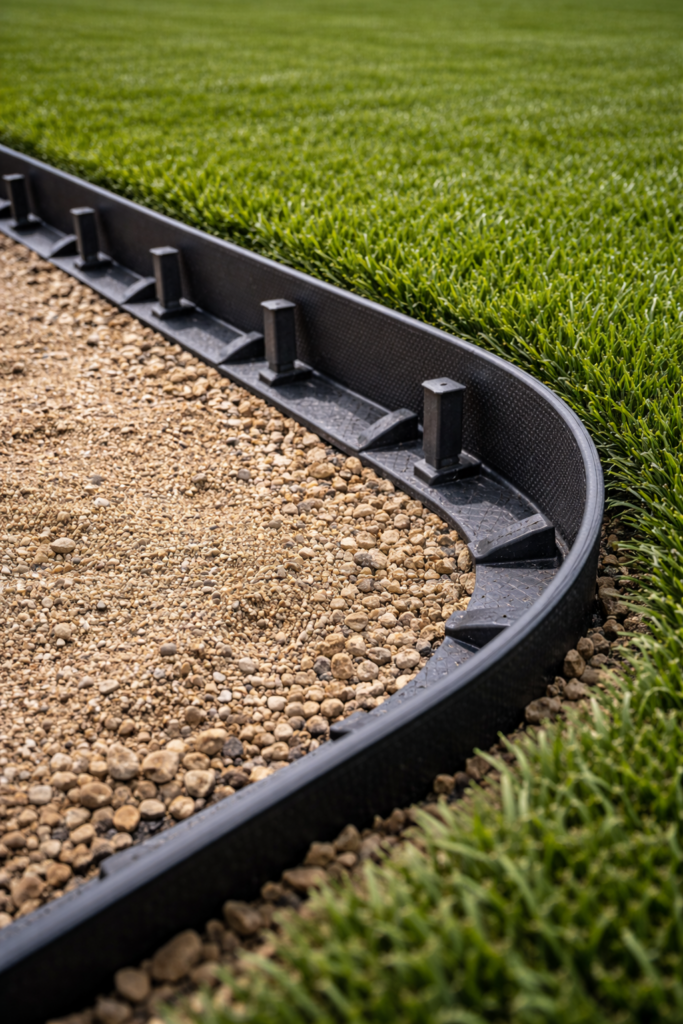
Edging and Containment Support the Base
Edges hold the system in place.
They prevent lateral movement.
They protect base integrity.
Rigid restraints maintain clean transitions.
They anchor turf and aggregate layers.
They reduce edge lifting over time.
Poor edging allows creep.
The turf slowly shifts under use.
Seams and cuts open.
Professional systems integrate containment early.
They do not add it as an afterthought.
This improves long-term durability.
Why Base Quality Affects Seam Performance
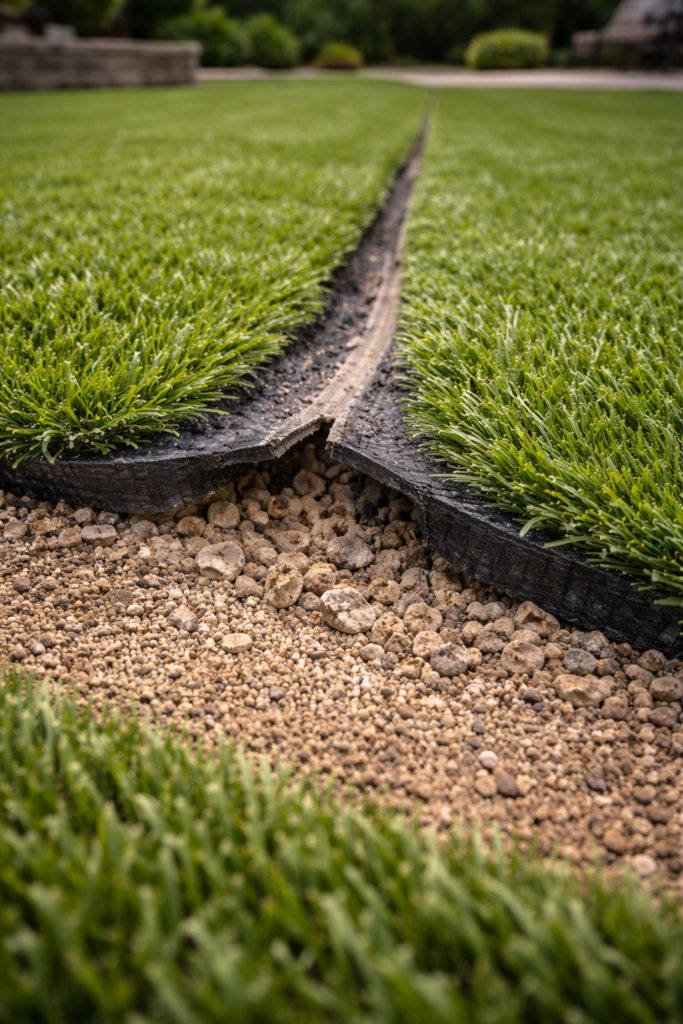
Seams rely on stable foundations.
Base movement stresses seam connections.
Adhesives fail under repeated shifting.
Uneven bases pull seams apart.
Temperature changes amplify this effect.
Visible lines appear months later.
Installers often blame turf quality.
The base usually causes the issue.
Stable foundations protect seam integrity.
High-quality seam work requires uniform support.
Base preparation enables consistent adhesion.
Without it, seams remain vulnerable.
Click HERE to understand how what causes turf seams to fail.
Base Preparation and Pricing Transparency
Quotes often omit base details.
Per-square-foot pricing hides preparation scope.
This creates misleading comparisons.
Professional quotes define excavation depth.
They specify aggregate type and thickness.
They outline compaction methods.
Lower prices often reflect reduced prep.
Shallower bases save labor and material.
Long-term costs increase.
Understanding base scope clarifies pricing differences.
It also protects homeowners from surprises.
Transparency builds trust.
Click HERE to understand why turf prices vary across North Texas.
How to Evaluate Base Preparation Before Hiring
Ask about excavation depth.
Find out how installers verify grade.
Ask about drainage planning.
Confirm aggregate type and size.
Ask how compaction occurs.
Ask how installers handle clay soils.
Vague answers signal risk.
Experienced contractors explain clearly.
They show process photos or examples.
Base preparation determines system lifespan.
Choosing correctly prevents future repair costs.
This decision matters.
Base Preparation Supports System-Specific Turf Designs
Different use cases require different bases.
Pet areas need enhanced drainage.
Play areas require impact stability.
Pool surrounds demand precise grading.
Water exposure increases base stress.
Proper preparation prevents migration.
High-traffic zones require deeper foundations.
Reinforced bases resist compression.
They preserve surface consistency.
One-size systems fail prematurely.
Custom bases extend performance.
They protect investment value.
Learn more about the OhMyYard turf systems HERE.
Why Professional Base Work Pays Off Long Term
Quality base systems reduce maintenance.
They minimize repairs and adjustments.
They extend turf lifespan.
Visual consistency improves with stable foundations.
Seams remain hidden longer.
Edges stay tight.
Homeowners avoid reinstallation costs.
They also avoid downtime.
Proper preparation delivers predictable results.
The base determines everything above it.
No turf blade fixes structural flaws.
Performance starts below the surface.
Final Thoughts on Turf Base Preparation in Texas
North Texas conditions demand precision.
Base preparation determines success or failure.
Shortcuts always surface eventually.
Professional systems prioritize groundwork.
They plan drainage, grading, and compaction together.
They design for long-term use.
Understanding base preparation protects homeowners.
It explains pricing differences clearly.
It prevents costly mistakes.
Strong turf systems begin underground.
Everything else depends on it.